What is the jet stream?
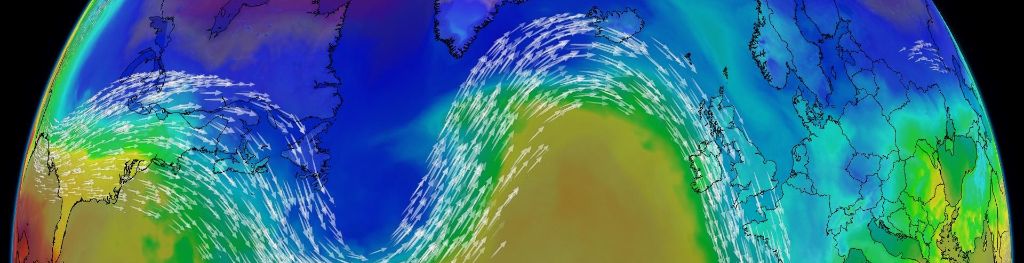
The jet stream is a core of strong winds around 5 to 7 miles above the Earth’s surface, blowing from west to east.
How does the jet stream work?
The jet stream flows high overhead and causes changes in the wind and pressure at that level. This affects things nearer the surface, such as areas of high and low pressure, and therefore helps shape the weather we see. Sometimes, like in a fast-moving river, the jet stream’s movement is very straight and smooth. However, its movement can buckle and loop, like a river’s meander. This will slow things up, making areas of low pressure move less predictably.
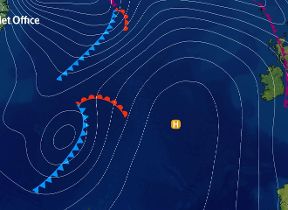
The jet stream can also change the strength of an area of low pressure. It acts a bit like a vacuum cleaner, sucking air out of the top and causing it to become more intense, lowering the pressure system. The lower the pressure within a system, generally the stronger the wind, and more stormy the result.
On the other hand, a slower, more buckled jet stream can cause areas of higher pressure to take charge, which typically brings less stormy weather, light winds and dry skies.
What causes the jet stream?
Earth is split into two hemispheres, and air is constantly moving around to spread heat and energy from the equator to the poles. Three large groups, or cells, in each hemisphere help to circulate this air within the lowest part of the atmosphere, the troposphere. Therefore, the jet stream exists largely because of a difference in heat, which in the northern hemisphere means cold air on the northern side of the jet stream and warm air to the south.
The seasons also affect the position of the jet stream. In winter, there is more of a temperature difference between the equator and poles, so the jet stream is stronger and flows over the UK. This is why we tend to see wetter weather. The reverse is true in summer, where there tends to be a smaller temperature difference. The position of the jet stream typically ends up to the north of the UK and we see calmer, drier weather.
How does the jet stream affect flights?
Met Office meteorologists work in one of only two centres in the world that produce weather charts for global aviation. They detail the location, height and strength of forecast jet streams and the turbulence associated with them.
Although the position and height of the jet stream changes, it essentially moves around at a similar level to that of transatlantic aircraft. If you were to fly along the flow of the jet stream it would be quicker and save fuel. However, if you arrive too early you’ll just end up circling and waiting to land. If the jet stream is weak then this can cause delays, and if you’re flying against the flow then it’ll be expensive on fuel and make you late. Flight planning is, therefore, quite a skill.
Jet streams can get rather bumpy as well, especially where the wind changes its speed, or when the stream isn’t straight. This churns up the air a bit like changes in a river’s flow, so turbulence is another, often unwelcome aspect of air travel.
From a technical perspective, flying on the side of the jet stream where there is cold air makes the aircraft’s engines operate and burn fuel more efficiently.