Met Office launches major upgrade to forecasting system
The Met Office has launched its most significant scientific upgrade in more than three years, a major step forward for the UK’s weather and climate science capability.
The new science delivers clearer, more accurate and more intuitive forecasts, bringing them closer than ever to real-world weather.
The upgrade marks a major step forward in the UK’s weather and climate science capability delivering tangible improvements that will make forecasts easier to interpret. Forecasts will now more accurately show rain and snow in a way that more closely reflects real-world‑ conditions.
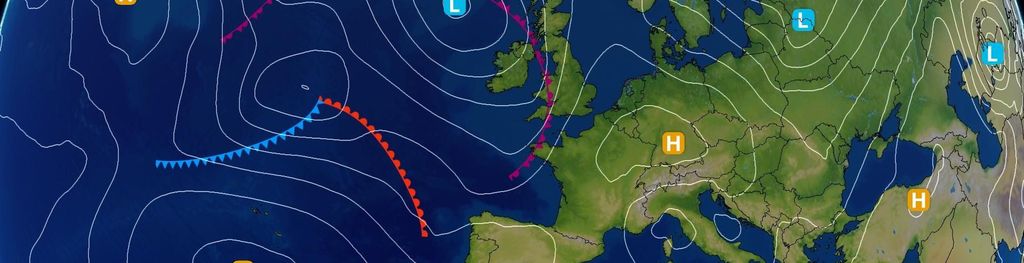
Storm Amy, October 3rd 2025 (60hr forecast)
Improved weather modelling will also provide more accurate guidance on cloud and fog, which is particularly relevant for travel or journey planning. This advancement will be vital for industries such as aviation, where precise weather information is critical to manage flight schedules, avoid delays, and ensure safe take offs and landings, especially in situations with low cloud bases, mist and fog.
Colder season temperatures will now be forecast across the UK with greater precision, offering better support for gritting operations to keep road networks safe and operational. Winter temperature forecasting advancements will mean more accurate demand prediction and cost-effective resource planning for the energy industry. Public health and social care sectors will benefit from earlier preparation and response.
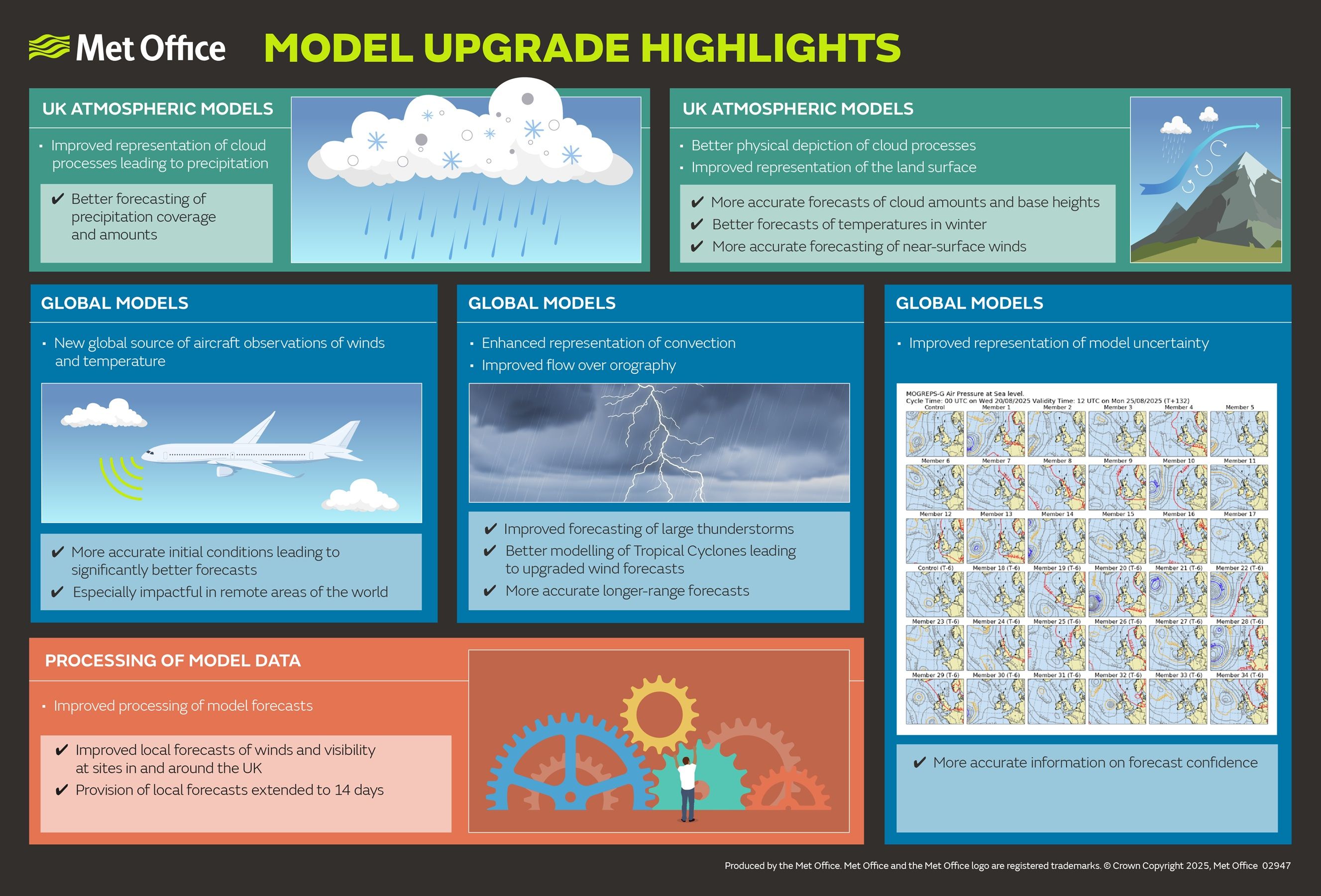
The upgraded system will deliver a clearer view of storm intensity around the world, strengthening global safety and humanitarian planning. It will extend our global forecasting out to 10 days, giving earlier insight into potentially disruptive weather. This will enable meteorologists to issue weather warnings further in advance and will help emergency responders and government partners prepare sooner, strengthening the UK’s overall resilience and early warning capability.
Read more: New scientific model upgrade is a major step forward in the accuracy of UK weather forecasting
Met Office Director of Science, Professor Simon Vosper said: “This is the biggest positive step in our forecasting systems for many years. The improvements we’re introducing will make our forecasts more accurate, more useful and more reflective of real-world weather. It marks the beginning of a new era powered by our supercomputing investment and will deliver substantial benefits for the public, partners and sectors across the UK.”
"This upgrade marks an important step forward in global weather and climate capability, reflecting years of collaboration between the Met Office, UK research partners funded by NERC, and leading modelling centres across the world. It demonstrates how working together internationally enables us to deliver more trusted, scientifically advanced forecasts that help strengthen resilience for everyone.”
This is the first major scientific advancement delivered using the Met Office’s new supercomputer, showcasing UK leadership in high performance computing and weather science. It reflects our commitment to innovation and strengthens the UK’s position as a global leader in weather and climate science, while showcasing how government investment is transforming the nation’s ability to prepare for and respond to weather related challenges.
Science Minister Lord Vallance said: “The Met Office’s new supercomputer has allowed more accurate forecasting, particularly for cloud and fog, two difficult areas for forecasting.
“Improvements in weather science benefit us all, from more flights running on time, to roads being gritted when they need to be, to enabling earlier preparations for storms that risk lives and damage to homes and businesses.”
These improvements will make weather forecast clearer, more usable and more relevant, it ensures the public, businesses and emergency services receive the most trusted and up- to date guidance, supporting informed decisions and helping communities stay safe, prepared and resilient.