Every day we make decisions based on what the weather is doing, or possibly what the forecast is telling us… put the washing on the line outside or in the dryer, wear a coat – or not – and what type of coat, drive to the shop, or enjoy the sunshine and walk.
It might be strange to think that all the bits of equipment, buildings, and cables that are a part of the environment we live in, are also impacted and affected by the weather. Their very design is shaped by the weather. Making sure the equipment stays dry, can cope with the heat, cold, storms or even corrosion from the impact of Saharan sandstorms, is vital.
For engineers this is all a headache – for Met Office science consultancy, this is why we get up in the morning. Understanding how weather and a changing climate impacts all those bits of equipment – metal structures, overhead cables, railways, roads etc. – is the excitement that fills our day.
So, what about the latest piece of work that has been announced? Well, that is the REVISE project (which stands for Revisiting and Evaluating Environmental Inputs on Line Ratings) and sees the transmission teams in SSEN Transmission, National Grid, and SP Energy Networks join forces with the Met Office and University of Strathclyde, plus a few others. Let me explain…
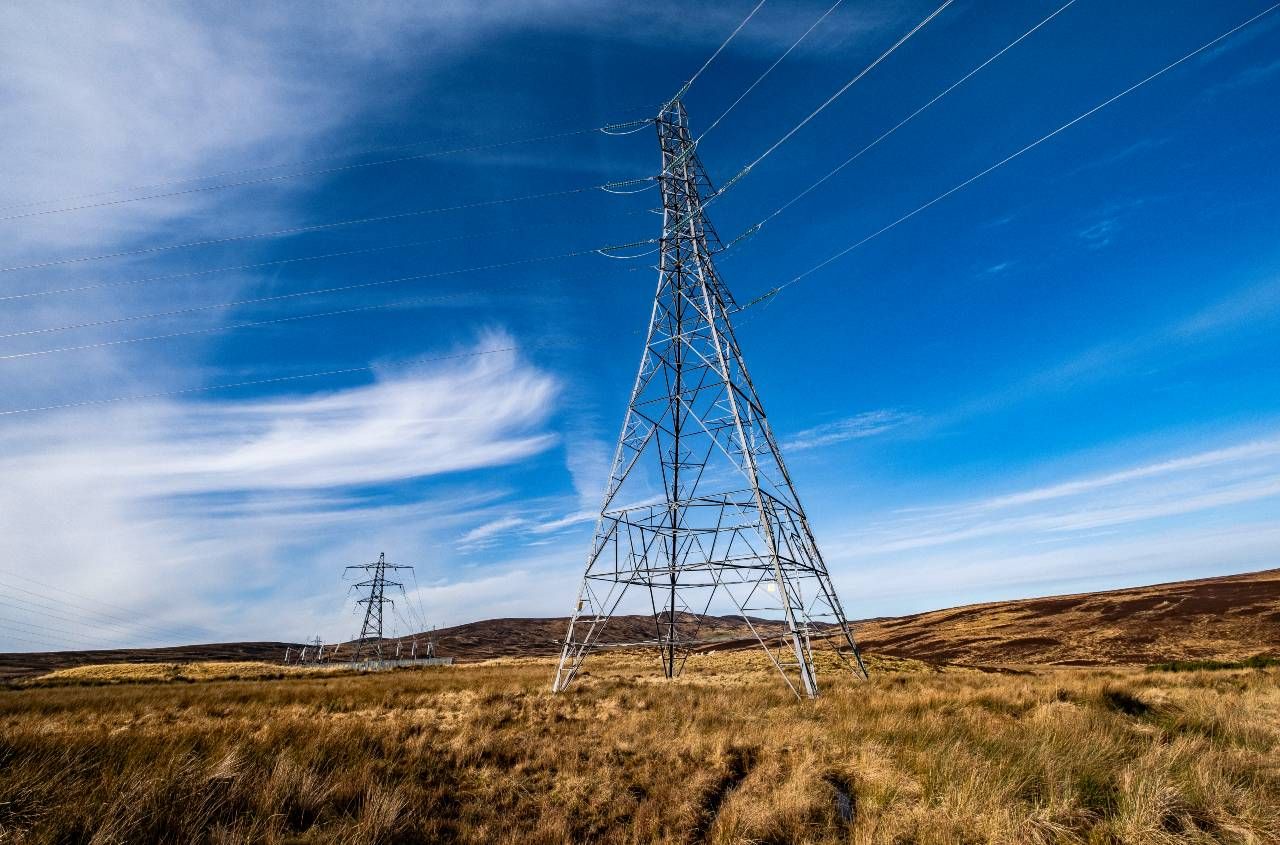
For decades, as we burnt fossil fuels to feed our demand, this network of cables was left largely untouched, but the clean energy revolution requires this network to be upgraded, added to, and brought into the 21st century in order to meet the demands of today and the future. But… simply replicating the past is not a great way forward. The pylons, the cables, the assets required to deliver the electricity have all been developed and improved, taking advantage of modern science and technology, but standards tend to advance more gradually. For example, the amount of electricity that can be safely passed along a cable running between the pylons, otherwise known as the ‘static line rating’ or SLR for short.
As you might anticipate, touching a power line – whether with vegetation or machinery, never mind with the human body – is somewhat dangerous. So, the SLR is there to make sure that lines don’t get too hot as this causes sag, and sag brings these lines nearer and nearer to touching things they shouldn’t. Interestingly, at least for weather geeks, weather is pretty important to SLR as even low winds offer a lot of cooling, although sunlight can also cause concern.
Back in the ‘70s when I was a boy, a piece of work was done in Leatherhead which set the SLR for the UK, which meant the warmer climate of the south was treated the same as the cooler climate of the far north (not least Scotland) in terms of SLR.
Now, common sense would say this isn’t logical for today, but it worked whilst we burnt fossil fuel. But now we have new cables, new pylons, new equipment, we have a growing network in Scotland and other parts of the country, and a greater drive for efficiency in order to keep costs down and make the most of what we have already.
Hence this project to REVISE the static line rating. Not simply changing the rate for the UK, but providing a regional SLR, and even the ability to provide an SLR for specific lines.
Excited? Well, you should be. This project represents a major opportunity to improve the efficiency of the UK Transmission Network.
This is an example of the Met Office science consultancy working with partners to bring the depth of understanding we have of weather together with engineering and technology to deliver solutions that support the UK’s clean energy ambitions.
Weather matters not just in terms of ‘wear a coat or not’, but for how much we spend on designing and building new equipment or upgrading what we have, how we keep all this equipment safe, and how we help it all to work well into the future.
READ: How does the Met Office work with the energy sector