
Met Office marks 50 years since the legendary summer of 1976
The summer of 1976 is one of the most remarkable and enduring in UK memory and has become a benchmark against which hot, dry summers are measured.
The iconic summer is remembered for its prolonged heat and lack of rainfall across much of the UK. From 23 June, a sustained hot spell saw temperatures regularly exceed 30°C widely across England, peaking at 35.9°C in Cheltenham on 3 July. Many areas also experienced weeks of dry conditions, with parts of southern England seeing little or no rain, contributing to severe drought conditions.
The graph below shows the two main heatwaves of the summer of 1976 in what was an otherwise often rather cool year.
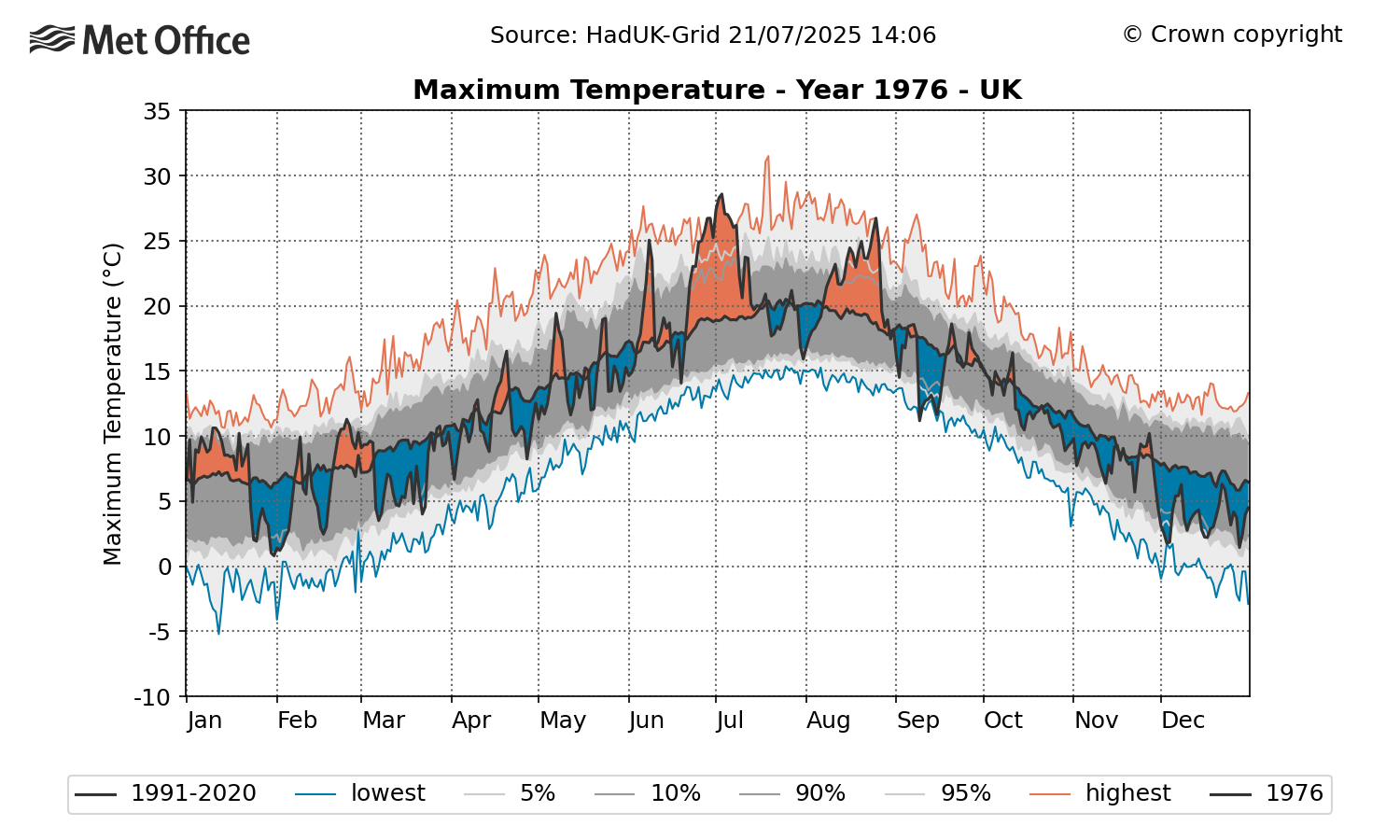
What set 1976 apart was not just the intensity of the heat, but its persistence. A ‘blocking’ high-pressure pattern trapped hot, dry conditions over the UK for weeks, while prolonged dry weather since May 1975 had already depleted soil moisture and water resources, intensifying the event. It remains one of the most significant combined heatwave and drought episodes in the UK’s recorded climate history.
Met Office Senior Climate Information Scientist, Mike Kendon, said: “The summer of 1976 is still talked about because of how unusual it was in both its intensity and duration. Fifty years on, it provides an important historical context for understanding how the UK’s climate can behave and how extreme weather can affect people, infrastructure and the environment.
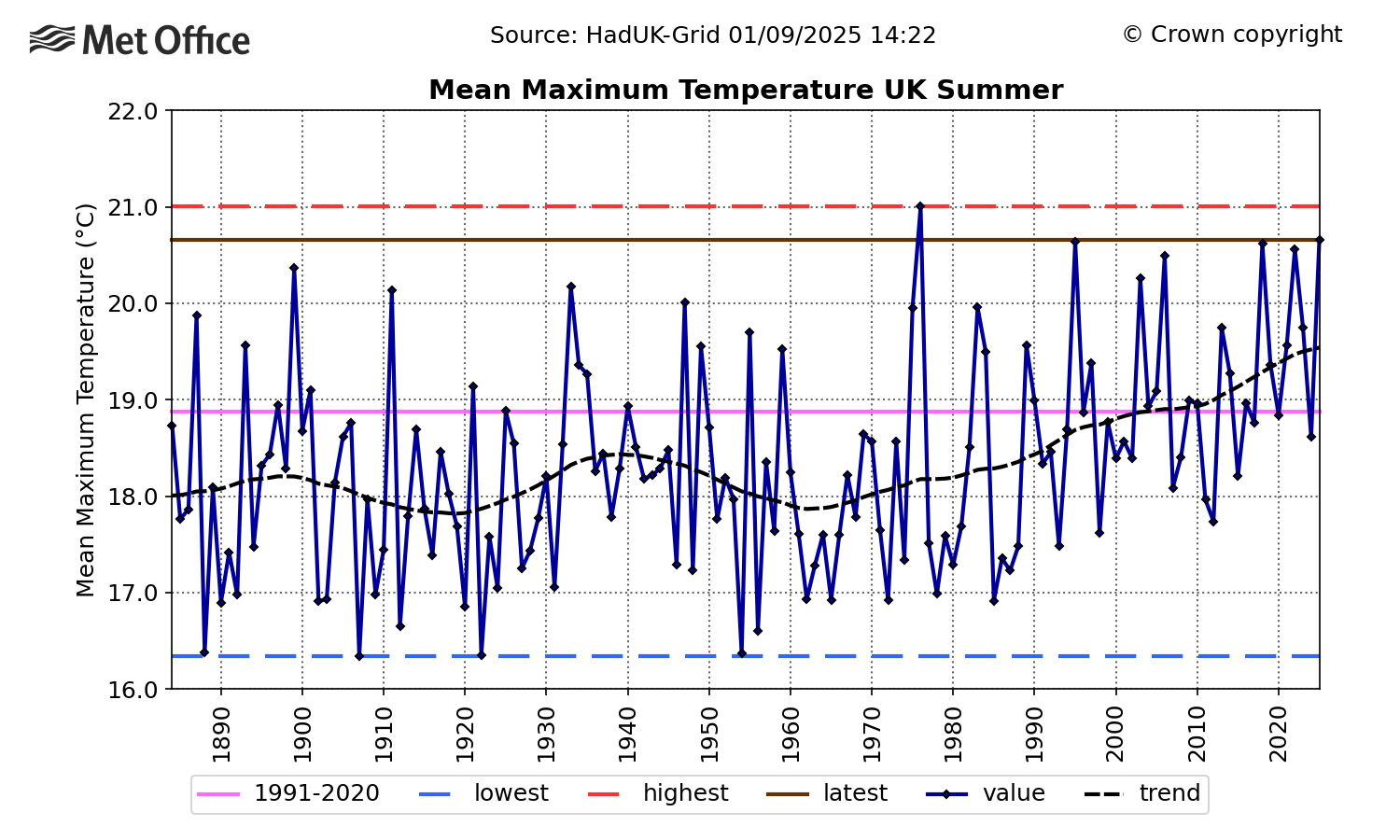
“In recent years, the absolute extremes of temperatures seen in 1976 have been exceeded multiple times. For example, in today’s warmer climate, temperatures of 36°C have been recorded on multiple occasions, including six days in the past decade, and the UK’s highest record temperature now stands at 40.3°C, recorded at Coningsby in 2022. But the reason 1976 stands out is because of the persistence of the warm, dry, sunny conditions. 1976 is still the UK’s hottest summer on record for average maximum temperatures, the UK’s sunniest summer on record and an exceptionally severe event in terms of lack of rain for a prolonged period extending through the preceding winter and back to summer 1975.”
See graph below which shows UK average maximum temperature from 1884 to 2025, indicating 1976 is still the highest for average maximum temperatures.
The impacts were widespread. Water shortages led to standpipes in some communities, crops and agriculture were badly affected, wildfires broke out, and the extreme heat contributed to increases in heat-related illness and hospitalisations. The government introduced emergency measures, including water restrictions, and appointed a Minister for Drought. For many, the summer of ‘76 became a defining national memory, remembered both for its exceptional weather and the challenges it brought.
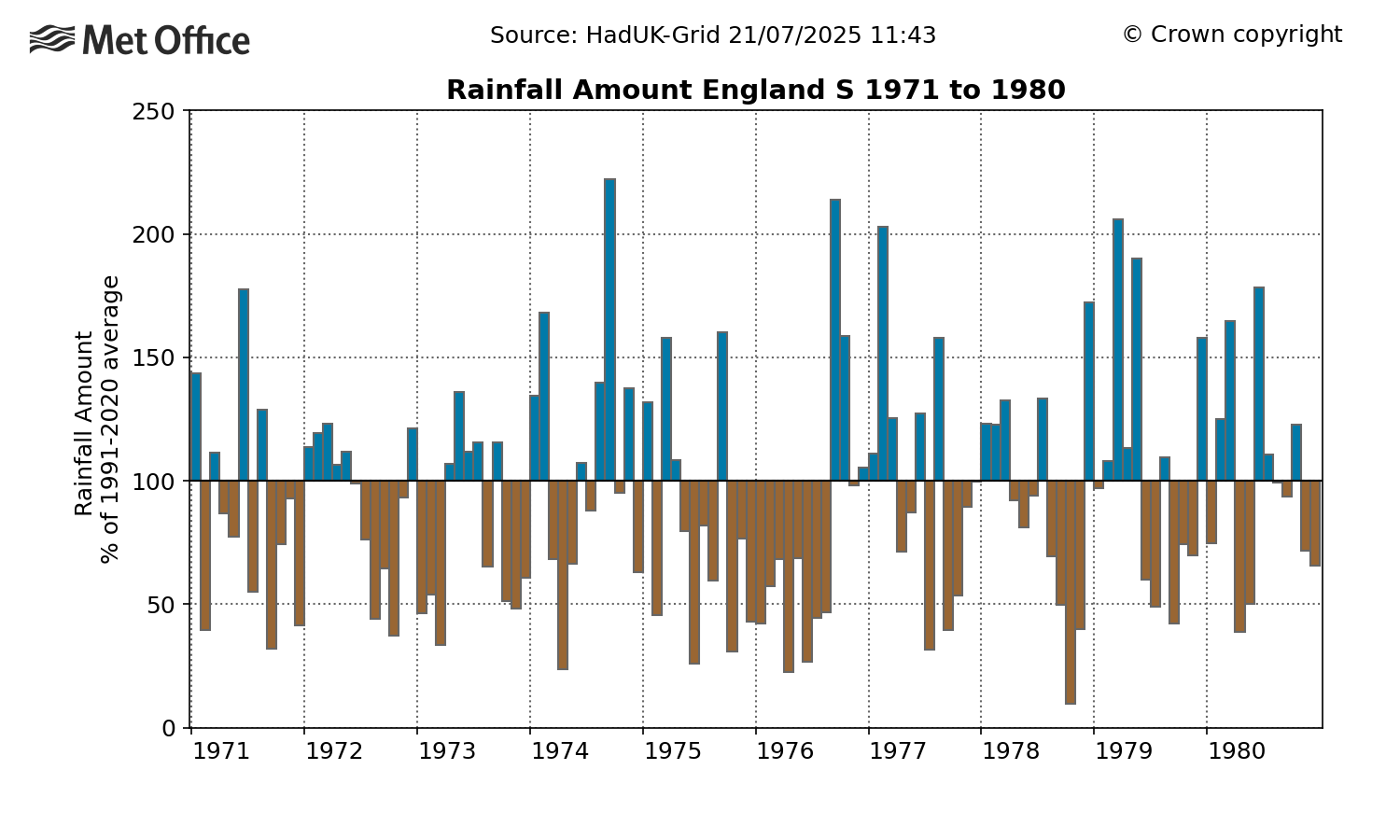
See graph below which shows the sustained nature of the drought from May 1975 to August 1976 across southern England and the abrupt end in September and October.
Environment Agency Director of Water and Chair of the National Drought Group, Helen Wakeham, said: “The 1976 drought saw widespread major impacts to the public water supply, dying wildlife, crop failures, and restrictions on businesses. It was a defining moment and changed both our attitude to water scarcity and the way the water industry manages our finite resources.
“While 1976 is remembered as extreme, our changing climate means that drought in this country is a new normal. We must continue to adapt and be wise with our water use. Simple steps like using a water butt, taking shorter showers, and turning off taps when brushing your teeth can make a real difference to the demands on our local rivers and the nature that depend on them.”
Events like 1976 continue to help scientists place more recent extremes into context. As the climate warms, such extremes are expected to become more frequent. The Met Office uses more than a century of observations, alongside the latest science and technology, to provide trusted information to support communities, businesses and decision-makers across the UK.
The Met Office, in partnership with the University of Reading, Newcastle University and the Royal Meteorological Society, will mark the 50th anniversary of the Summer of 1976 with a joint event in London on 22 June, where new analysis will be presented alongside a future weather forecast for 2056 developed by the Met Office.