
Climate Science for Service Partnership (CSSP) Brazil
The Climate Science for Service Partnership (CSSP) Brazil is a collaborative climate science initiative between research institutes in the UK and Brazil.
What is the Climate Science for Service Partnership (CSSP) Brazil?
Launched in 2016, the Climate Science for Service Partnership (CSSP) Brazil is a research project that aims to build strong partnerships between research institutes in the UK and Brazil.
CSSP Brazil produces collaborative science that is fundamental to the development of climate services that support climate-resilient economic development and social welfare.
The project provides grants to support researchers from the UK climate science community in their work with Brazilian research institutes.
CSSP Brazil is part of our Weather and Climate Science for Service Partnership (WCSSP) programme. The programme is funded through the UK government’s International Science Partnerships Fund (ISPF), with the Met Office serving as a delivery partner.
Our VIEWpoint Brazil website is a showcase for some of the resources we have produced in the CSSP Brazil project, including case studies, topic briefings and videos. All these resources are provided in accessible language, in both English and Portuguese, to support climate decision-making.
Download our CSSP Brazil 2025 infographic to learn about the difference the project is making.
https://www.youtube.com/watch/145dGax8SI0?start=0Who is involved in the project?
The project is a collaboration between the Met Office, UK scientific institutes and Brazil's National Institute for Space Research (INPE), National Institute for Amazon Research (INPA) and the National Centre for Monitoring and Early Warning of Natural Disasters (CEMADEN).
UK academic partners include UK academic partners include and have included University of Exeter, University of Leeds, University of Oxford, University of Reading, University of Edinburgh and the Centre for Ecology and Hydrology.
UK research institutes can find out about research calls and how to get involved in the project by visiting our WCSSP funding opportunities page.
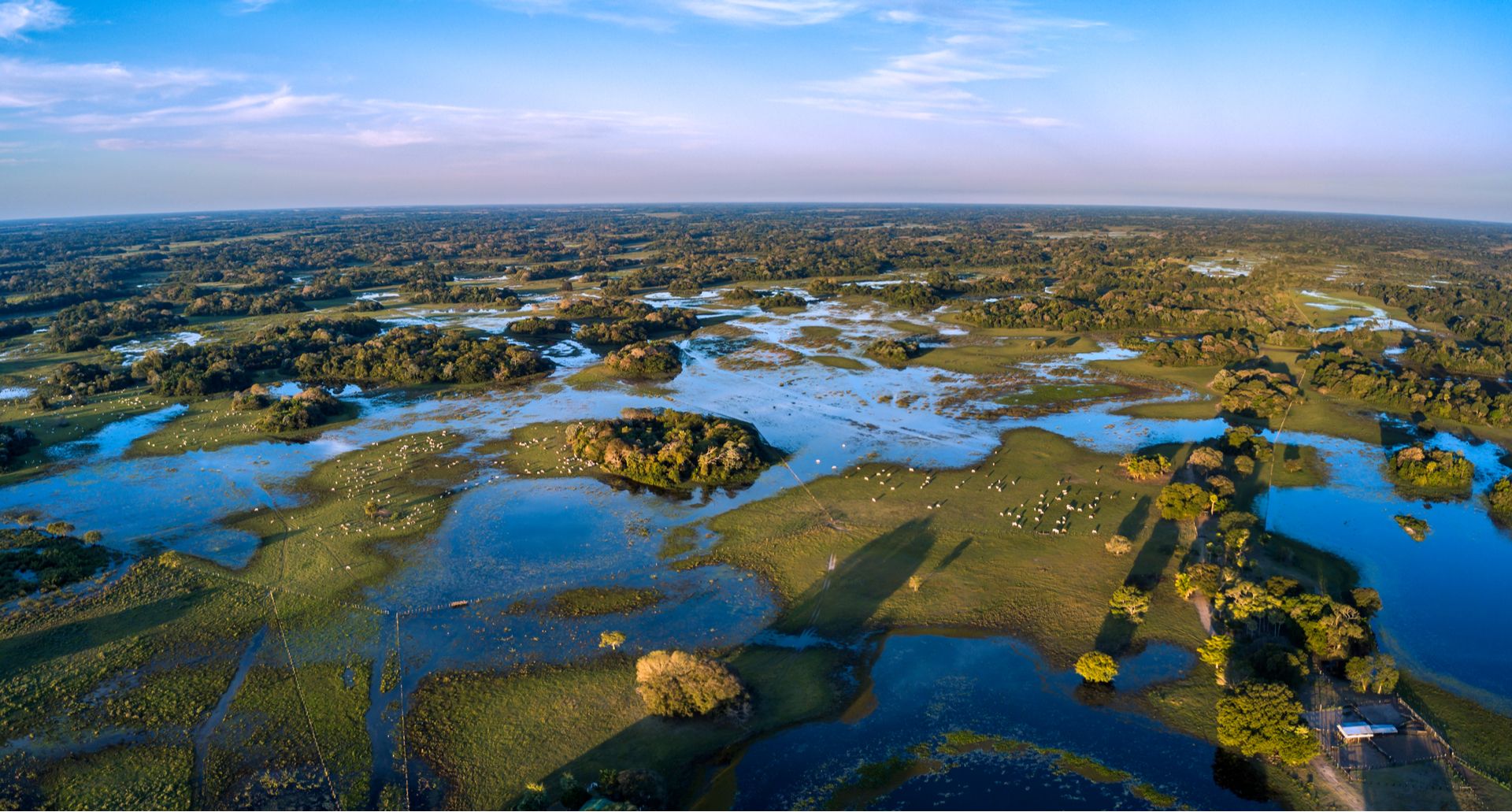 The Pantanal, the world’s largest tropical wetland, is an important region for monitoring natural methane emissions.
Key research areas
Brazilian ecosystems and the carbon cycle
Brazilian ecosystems absorb and store a significant amount of carbon. CSSP Brazil is improving our understanding of the role of these ecosystems, such as the Amazon rainforest and the Cerrado savannah, in the global carbon and methane cycles. The project is also improving how wildfires, which impact the global carbon cycle, are represented in climate models.
Climate modelling
Changes in rainfall can have a significant impact on life in Brazil. Droughts can lead to reductions in freshwater availability for people and livestock, and heavy rainfall can result in flooding and landslides. CSSP Brazil research aims to improve predictions of changes in rainfall over Brazil through enhancing climate model capability around processes associated with rainfall.
Climate impacts and disaster risk reduction
Many extreme climate events in Brazil are water related including floods, droughts and fire. These events can have damaging social, economic and environmental impacts and since 1979 there have been an estimated 5,000 deaths due to extreme rainfall events.
CSSP Brazil is working to understand and predict changes in weather-related risks and impacts due to climate change, as well as improve the predictability and warnings of hydrological extremes. This will help enhance Brazil’s capabilities in Disaster Risk Reduction and protect the economy, infrastructure and lives and across Brazil.
Recent research grants
We have recently offered opportunities to conduct research for CSSP Brazil in the following areas:
- Moisture transport and defrostation
- Sub-seasonal and seasonal predictions for advancing climate services in Brazil
- Moisture transport responses to land-use change and climate change over Brazil
- Ecosystems responses to extremes
- Understanding and attributing weather and climate events, and their socio-economic impacts on key food, water and health sectors in Brazil
- Constraining future projections of wildfire and air quality in Brazil
- Physical drivers of drought (and drought related compound) events in Brazil and link to human activities.
Visit our WCSSP funding opportunities page to find out about any open calls.
This page was last updated in January 2026.