Pollen levels are set to increase across many parts of the UK over the coming days, dominated by grass pollen levels with weed pollen also present.
While northern Scotland will continue to see generally low levels, much of England and Wales will experience high to very high pollen as the weekend progresses.
Across Orkney, Shetland, the Highlands, pollen levels will remain low throughout the five-day period.
Further south across parts of Scotland, including Grampian and central areas, levels will start low but rise into the weekend, becoming high by Sunday and Monday in some locations.
Northern Ireland will follow a similar trend, with pollen increasing from low to high, and very high by the start of next week.
Across England and Wales, grass pollen will dominate and maintain high levels throughout, with many areas seeing a further increase into very high categories.
The north of England will see persistent high pollen levels, while regions such as Yorkshire, the Midlands and the northwest will widely reach very high levels by the weekend or early next week.
Wales will also see a steady rise, with moderate levels increasing to very high by Sunday and Monday.
The highest pollen levels are expected across southern and eastern England. In the East of England, very high pollen levels are likely throughout the period.
London and the southeast will see high levels at first, rising quickly to very high and remaining elevated through the weekend and into Monday.
The pollen forecast is updated each day here.
READ MORE: How does weather affect pollen and can pets get hay fever?
Is pollen worse this year?
The Met Office has no data to support the claim that pollen is ‘worse’ this year. Pollen levels can vary significantly depending on the timing of weather patterns and the types of pollen in season. Some years may feel more severe for individuals due to a combination of high pollen counts and exposure to multiple pollen types at once. The grass and weed seasons started earlier and stronger than we would usually see due to the warm weather experienced during the late May bank holiday weekend, so this may be impacting some people’s perception of the season.
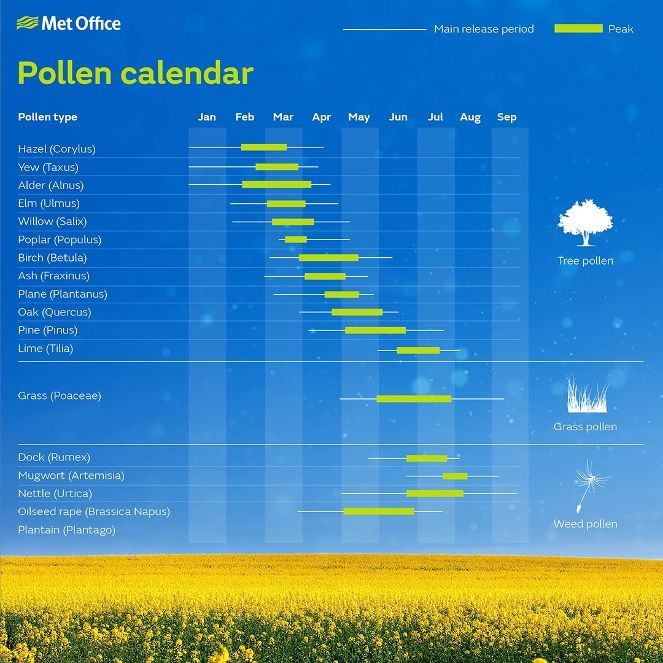
Grass pollen is the main cause of hay fever at this time of year and typically peaks in June, with levels currently high or even very high across parts of the country. Weed pollen is also present at lower levels than grass.
Recent warm, dry conditions with light winds are ideal for pollen to be released and carried through the air, while a lack of rainfall means it isn’t being washed away, which can make symptoms feel particularly severe. Spells of rainfall with sunshine in the last few weeks have provided the ideal growing conditions for grass and weeds.
For most hay fever sufferers, the worst conditions are warm, dry and breezy days. These allow pollen to be released easily and spread efficiently through the atmosphere. Calm, dry days can also lead to high levels locally, as pollen accumulates near the source.
By contrast, cooler conditions, higher humidity and rainfall tend to reduce airborne pollen, at least temporarily.
What are the different types of pollen?
If you're a hay fever sufferer, it helps to understand which type of pollen affects you and when it's likely to be in the air. The UK pollen season typically follows the below pattern, but the seasons can start earlier or run later depending on where you live in the UK and what the weather's doing.
How do I access the Met Office Pollen forecast?
You can access our pollen forecast on the Met Office website or download our app to get pollen alerts sent straight to your phone.
You can also keep up to date with weather warnings, and find the latest weather forecast on our website, on YouTube, by following us on X and Facebook, as well as on our mobile app which is available for iPhone from the App store and for Android from the Google Play store.