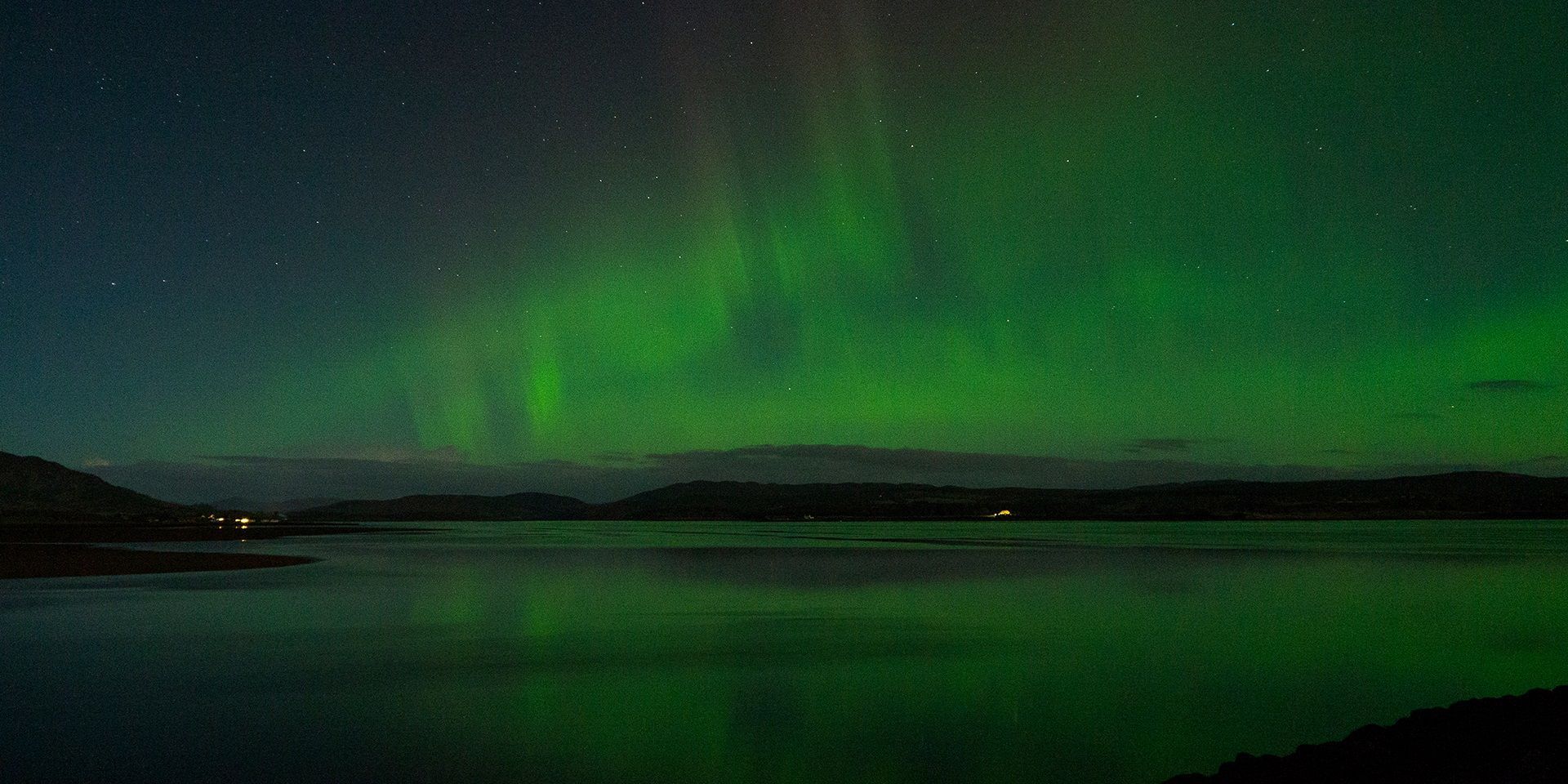
Potential for aurora tonight and Wednesday night, will there be clear skies?
There is potential to see the aurora over the UK across the next two nights, as increased solar activity reaches Earth.
While the space weather setup may support sightings, whether you catch a glimpse will depend largely on cloud cover and how much clear sky develops overnight.
Increased solar activity brings potential
The arrival of a coronal mass ejection is expected to bring a period of enhanced geomagnetic activity, with a further pulse of activity likely into Wednesday night. This creates a window of opportunity for aurora sightings, particularly across northern parts of the UK.
However, as always, viewing the aurora is highly dependent on a combination of space weather strength, cloud cover and available darkness. At this point in the year, with short nights and lingering twilight, conditions are not ideal, especially at higher latitudes where true darkness is limited.
Conditions for Tuesday night
Closer to the ground, the weather conditions overnight will be mixed, and the outlook for potential clear periods doesn’t look promising.
Showers and thunderstorms are expected to gradually fade through the evening, leaving behind a mix of variable cloud and clear spells.
Clear periods could potentially develop in north eastern parts of Scotland, however, due to the timings of these clearances, daylight could prevent any substantial viewing opportunities
There is the potential for an Aurora across the northmost part of Scotland tonight
— Met Office (@metoffice) June 30, 2026
However the time of year will limit any favourable viewing conditions due to limited extent of darkness in the higher latitudes pic.twitter.com/hWP8ysEFEl
Conditions for Wednesday night
A broadly similar pattern is expected into Wednesday night. Some areas in central and southern England are likely to see variable cloud with occasional clearer intervals, however, any auroral activity is unlikely to reach this far south.
As with Tuesday night, any breaks in the cloud will be crucial. Even short-lived clear spells could provide an opportunity to see any aurora activity if it aligns with peak geomagnetic conditions.
Best chances of seeing the aurora
The greatest chance of seeing the aurora will be across the far north of Scotland, where geomagnetic activity is more likely to be strong enough to produce visible displays.
Here, any clear skies will be key, although the limited hours of darkness will still make viewing more challenging than during the winter months.
Auroral activity is less likely to reach more southern parts of the country, meaning sightings here are unlikely and would require stronger-than-expected activity.
READ MORE: Landmark moment for space weather forecasting as SOLAR-1 becomes operational
What to look for
If conditions align, the aurora may appear as a faint glow low on the northern horizon. At this time of year, it is often subtle and may not be immediately obvious to the naked eye, particularly with twilight still present.
Long-exposure photography can sometimes reveal more vivid colours and structure, even when the display appears faint in real time.
Those hoping to see the aurora are advised to seek out locations away from light pollution, with a clear view towards the northern horizon, and to keep an eye on changing weather conditions through the night.
There is a slight window of opportunity for aurora sightings across both tonight and Wednesday night, driven by elevated solar activity. However, viewing conditions will be far from perfect, with cloud cover and limited darkness both playing a key role.
Keep up to date with weather warnings, and you can find the latest forecast on our website, on YouTube, by following us on X and Facebook, as well as on our mobile app which is available for iPhone from the App store and for Android from the Google Play store.