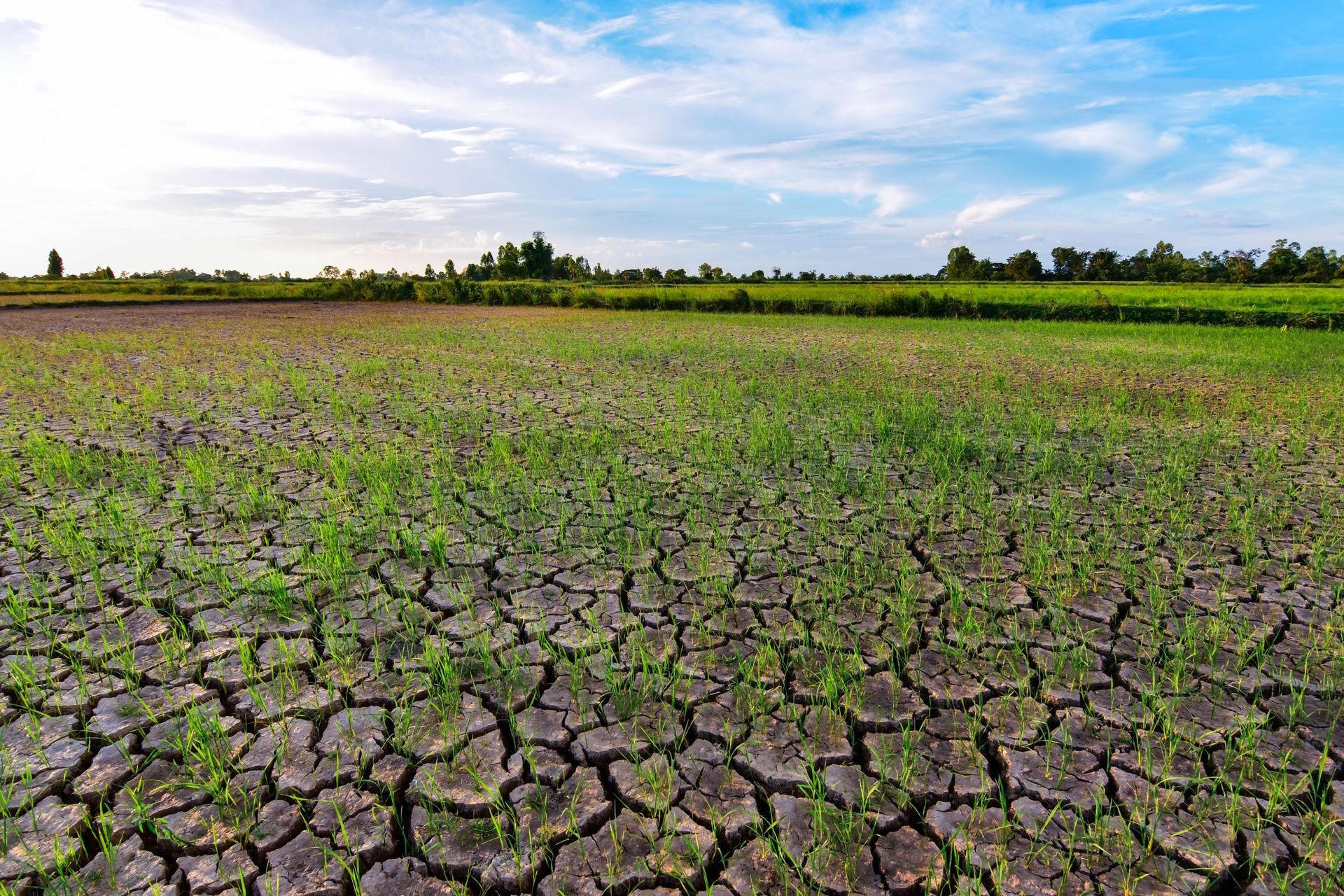
Summer 2026 was the UK’s hottest summer on record, bringing prolonged warmth and exceptionally dry conditions to many areas.
Every county in England, Wales and Northern Ireland recorded its hottest summer, as did some counties in southern Scotland. However, there was a marked regional contrast, with the greatest temperature anomalies in southern England while northwest Scotland was wetter than average.
This raises an important question: was summer 2026 an exceptional event, or could similar conditions become increasingly familiar as the climate warms?
Putting Summer 2026 into context
The mean temperature across the UK during summer 2026 was close to 16.5°C. Climate projections indicate that a summer of this warmth would remain above average in a world around 2°C warmer than pre-industrial levels. At higher global warming levels, however, its place within the distribution changes. It would be close to average at a global warming level somewhere between 2.5°C and 3°C.
That does not mean every future summer would resemble 2026. The UK will continue to experience natural variability, including relatively cool or wet summers. However, the distribution of possible conditions shifts as the climate warms, making hotter summers more commonplace and creating the potential for events more extreme than those experienced so far.
The change has already been notable. Summer 2025 set a UK mean-temperature record of around 16.1°C, approximately 0.4°C above the previous record. Summer 2026 then raised the record by another 0.4°C.
A different picture across the UK
The effects of summer 2026 were not evenly distributed. For Scotland as a whole, it was the joint-sixth warmest summer, with average rainfall around 93% of the long-term average. Northwest Scotland was wetter than average, while parts of southern Scotland recorded their hottest summer.
Southern England experienced a much more exceptional combination of heat and dryness. Its summer rainfall was close to the average projected for a world around 3°C warmer, while its temperature was also broadly comparable with a typical summer at that warming level.
Even within a generally drier future climate, southern England could still experience very intense summer rainfall. The projections retain a wide range of possible rainfall outcomes, including simulations with substantial totals produced by localised thunderstorms.
Hotter does not always mean uniformly drier
UK climate projections show a broad movement towards hotter and drier summers, but seasonal rainfall is more complicated than a simple decline. A warmer summer can still include periods of intense rain, particularly from thunderstorms.
High-resolution climate simulations can represent showers and thunderstorms, revealing the potential for highly localised rainfall. One location may experience a severe downpour while somewhere nearby remains dry. As the climate warms, the average summer may become drier, but the range of possible outcomes still includes very wet seasons and short periods of intense rainfall.
Summer 2026 itself demonstrated how rainfall can vary over time. Wet weather occurred during early June and late August, but the intervening period brought prolonged dryness. Wisley recorded 62 consecutive dry days, while Kew Gardens had no rain during July. These wet periods at either end of the season meant that 2026 did not ultimately become one of the UK’s driest summers on record.
Preparing for greater extremes
Preparing for a changing climate involves more than responding to higher temperatures alone. Heat can affect health services, schools, roads, agriculture, energy supplies and the transport of temperature-sensitive food and medicines. These impacts are interconnected, meaning adaptation needs to consider how different systems depend upon one another.
The UK will still experience considerable variation from one year to the next. Nevertheless, summer 2026 offers a window into conditions that could become increasingly familiar, while reminding us that future extremes may go well beyond anything experienced during this record-breaking season.
https://www.youtube.com/watch/nI74wUj-zRU?start=0Keep up to date with weather warnings, and you can find the latest forecast on our website, on YouTube, by following us on X and Facebook, as well as on our mobile app which is available for iPhone from the App store and for Android from the Google Play store.