
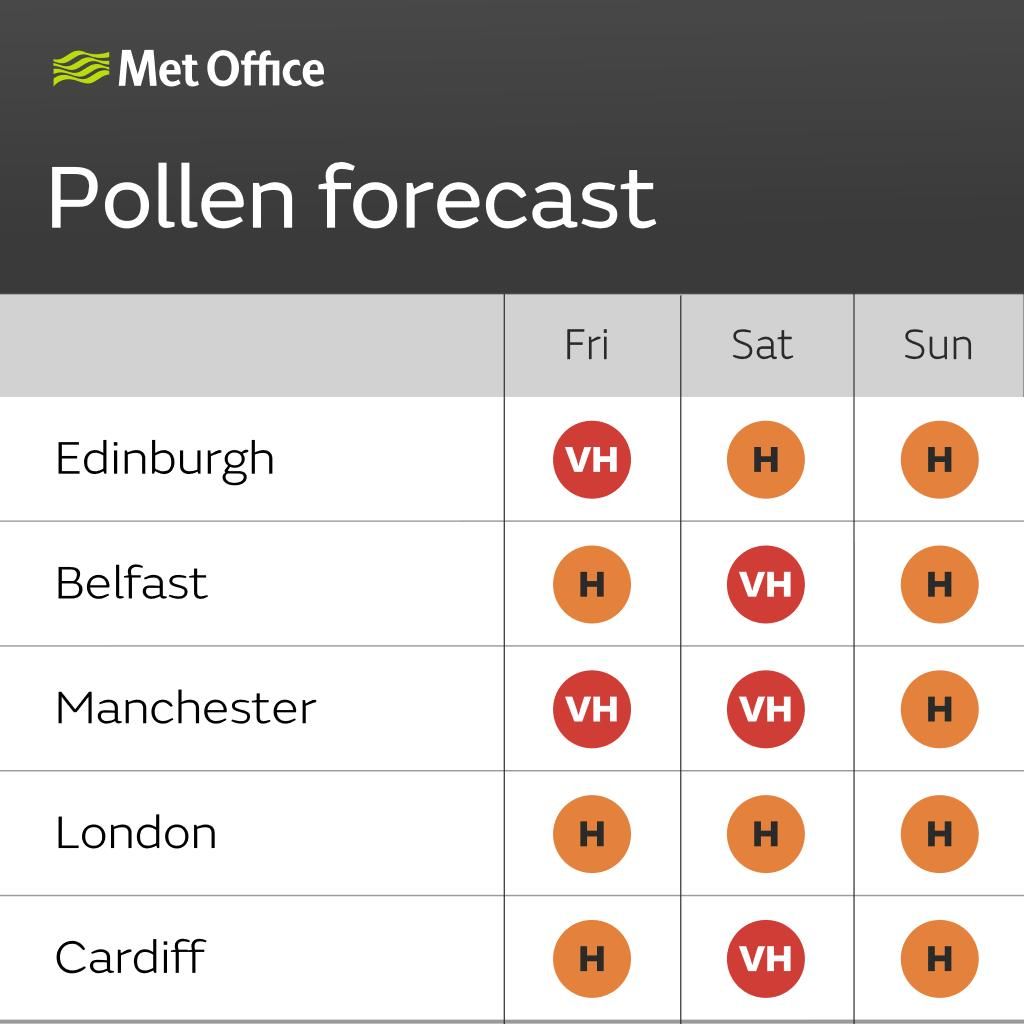
Pollen levels across the UK are forecast to vary over the next five days, with a gradual increase across parts of England as tree pollen becomes more prevalent before reducing slightly towards the start of next week.
While many northern and western and southwestern areas will continue to experience high pollen levels, conditions further east are likely to be milder before rising again across the weekend, with many areas experiencing high or very high levels.
Regional outlook
Orkney & Shetland
Pollen levels are expected to remain low throughout the next five days. Cooler temperatures and generally lighter vegetation growth at this time of year will limit pollen release. Even during dryer spells, levels should stay low, offering some relief for most allergy sufferers.
Highlands & Eilean Siar
Birch pollen levels will fluctuate over the next few days, starting at moderate levels before briefly rising high. Dry, warm conditions will encourage pollen release, particularly inland and in sheltered glens. Levels ease back later in the period, especially where cooler air or fresher breezes develop.
Grampian
High birch pollen levels dominate the forecast, with moderate ash pollen also contributing at times. After a high start, levels dip slightly before rising again towards the end of the period. Dry conditions and light winds favour pollen release, particularly away from the coast.
Central, Tayside & Fife
Birch pollen remains very high for much of the next five days, driven by settled weather. Values peak through the middle of the period before easing slightly, though remaining high overall. Light winds inland allow pollen to build up, while coastal areas may see some moderation at times.
Strathclyde
High to very high birch and ash pollen levels are expected across Strathclyde. The combination of dry weather and light winds inland will allow pollen to accumulate, especially in sheltered urban and rural locations. Although levels ease slightly at times, they remain high for most of the period.
Dumfries, Galloway, Lothian & Borders
Birch pollen is set to remain high throughout the forecast period, with moderate ash pollen also present. Very high levels are possible at times under dry conditions. Inland areas are particularly prone to elevated pollen counts, while exposed coastal locations may see some reduction.
Northeast England
Birch pollen levels rise from moderate to high through the period, while the oak pollen season is just beginning. Dry weather and increasingly warm temperatures will support pollen release, particularly away from the immediate coast.
Northern Ireland
Birch pollen levels increase from moderate to high, with a brief spell of very high levels likely. Some Moderate levels of ash pollen are still possible. Dry, settled conditions and sunshine will promote pollen release, especially inland and in sheltered valleys.
Yorkshire & Humber
Pollen levels rise from moderate to high as the birch pollen season finishes and oak pollen season begins. The settled, dry weather pattern favours pollen build‑up, particularly inland. High levels are likely for several days, with only small day‑to‑day fluctuations.
Northwest England
High to very high birch pollen levels are expected, with oak pollen also starting to contribute. The combination of dry weather and light winds inland will support significant pollen release, particularly through the middle of the period. Levels ease slightly later but remain high overall.
East Midlands
Birch and oak pollen levels are expected to be generally moderate at first, with oak pollen levels rising to high through the middle of the period before easing slightly. Dry conditions and increasing warmth encourage pollen release, particularly away from more exposed areas.
West Midlands
Moderate birch levels decreasing as the season ends, but currently Moderate oak pollen levels rise to high for much of the forecast period. Settled weather allows pollen concentrations to build. Levels remain high for several days with little rainfall to suppress them.
Wales
High birch pollen dominates the forecast, with moderate oak pollen also present but rising rapidly as the season becomes established. Very high pollen levels are possible at times, particularly through the middle of the period under dry conditions. Inland valleys and sheltered areas are most affected, while coastal regions may occasionally see lower levels due to onshore winds.
East of England
Oak pollen becomes the main contributor here, starting at moderate levels before briefly rising high. Levels then ease later in the period as conditions change slightly. Dry weather promotes pollen release initially, but coastal influences and occasional breezes help lower concentrations at times.
London & southeast England
High oak pollen levels persist through much of the next five days, gradually easing towards the end of the period. Warm, dry conditions encourage sustained pollen release, particularly in parks and greener suburbs.
Southwest England
Both birch and oak pollen affect the region, with levels generally high and locally very high. Dry weather supports pollen release, particularly inland and away from exposed coasts. Very high levels are most likely later in the period before easing slightly.
The pollen forecast is updated each day here.
READ MORE: How does weather affect pollen and can pets get hay fever?
What are the different types of pollen?
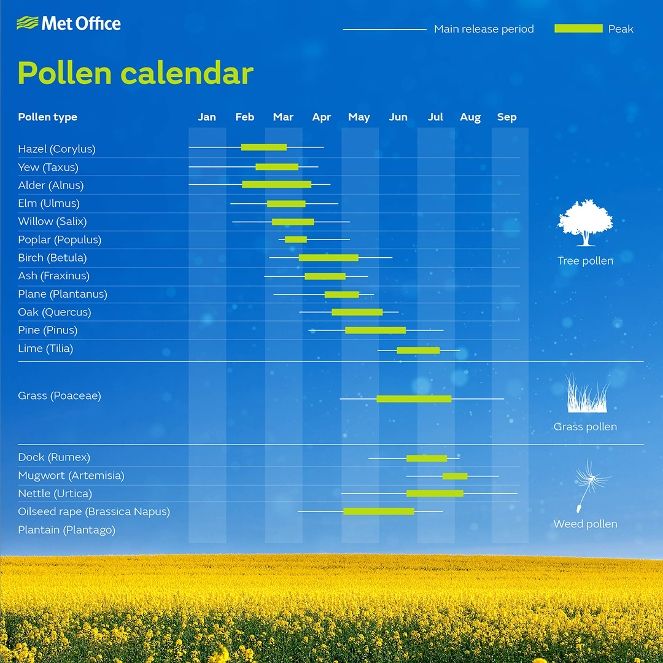
If you're a hay fever sufferer, it helps to understand which type of pollen affects you and when it's likely to be in the air. The UK pollen season typically follows the above pattern, but the seasons can start earlier or run later depending on where you live in the UK and what the weather's doing.
How do I access the Met Office Pollen forecast?
You can access our pollen forecast on the Met Office website or download our app to get pollen alerts sent straight to your phone.
You can also keep up to date with weather warnings, and find the latest weather forecast on our website, on YouTube, by following us on X and Facebook, as well as on our mobile app which is available for iPhone from the App store and for Android from the Google Play store.