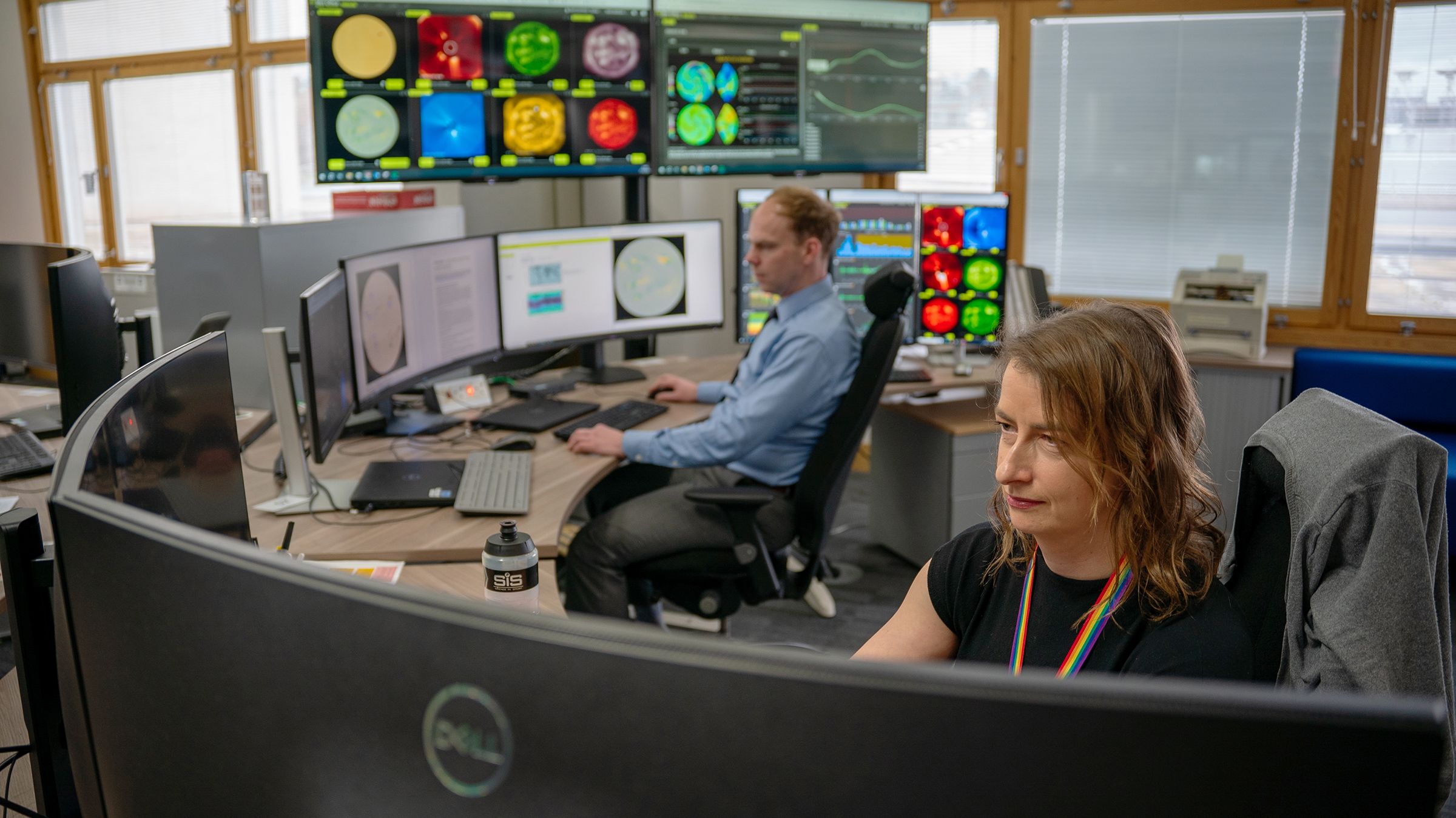
New guidance from the Met Office and the Department for Transport highlights how space weather can affect communications, navigation and other technologies used across the transport sector, helping operators better understand and prepare for potential impacts.
The newly-published guidance, available for free via a Met Office space weather user account, joins together expertise from the Met Office Space Weather Operations Centre and transport sector knowledge to help key decision-makers understand space weather impacts and use Met Office notifications to help take proportionate action in response to space weather events.
The guidance contains specific information relevant for operators across the aviation, maritime, rail and road sectors, and also includes real-life case studies from space weather events in recent years.
Met Office Space Weather Manager Krista Hammond said: “While severe events are rare, space weather has the potential to bring impacts to transport, but part of our role as one of a handful of 24/7 space weather forecasting centres in the world is to use our expertise to help people understand the risks and, importantly, take action to prevent the worst of the impacts.
“This guidance aims to demystify the alerts and warnings that are issued by the Met Office; helping key transport operators to get the information they need to make critical decisions to mitigate impacts.”
A spokesperson from the Civil Aviation Authority said: “The CAA actively encourages a greater understanding of space weather impacts to aviation, enabling industry to effectively mitigate applicable risks and improve resilience during a severe space weather event, and therefore fully supports the publication of information that supports these objectives such as the new Met Office guidance.”
The impact of space weather
The new guidance provides information on space weather terminology, notifications and even a breakdown per transport mode of potential impacts of space weather events, including solar flares, geomagnetic storms and solar radiation storms.
Potential impacts from space weather on the transport sector highlighted in the guidance include disrupted high frequency radio communications, GNSS/GPS positioning errors and even, in the most severe events, the possibility of localised power outages. Whilst it’s important to note that most space weather events have little or no impact on everyday transport operations, this guidance will help operators understand when impacts may occur during periods of heightened space weather activity.
The guidance provides transport organisations with consistent and authoritative information to support operational decision-making and resilience planning.
As well as more recent case studies on the May 2024 and September 2017 events, the guidance also examines the 1859 Carrington Event, which is considered to be the most intense space weather event in recorded history.
With society less reliant on technology in 1859, and no satellites, the impacts at the time were limited to erratic compass readings, disruption to telegraph services and fires resulting from sparking on telegraph lines, as well as auroras visible globally, even in tropical latitudes.
Fortunately, such severe events are incredibly rare, but the Carrington event is used by planners as a reasonable worst-case scenario for the potential impacts of severe space weather.
Access the new guidance now via a Met Office space weather user account. The service is free and just requires an account to be created. Once you have created an account, you will find the document under the transport resources tab.
Find out more about space weather at the Met Office.