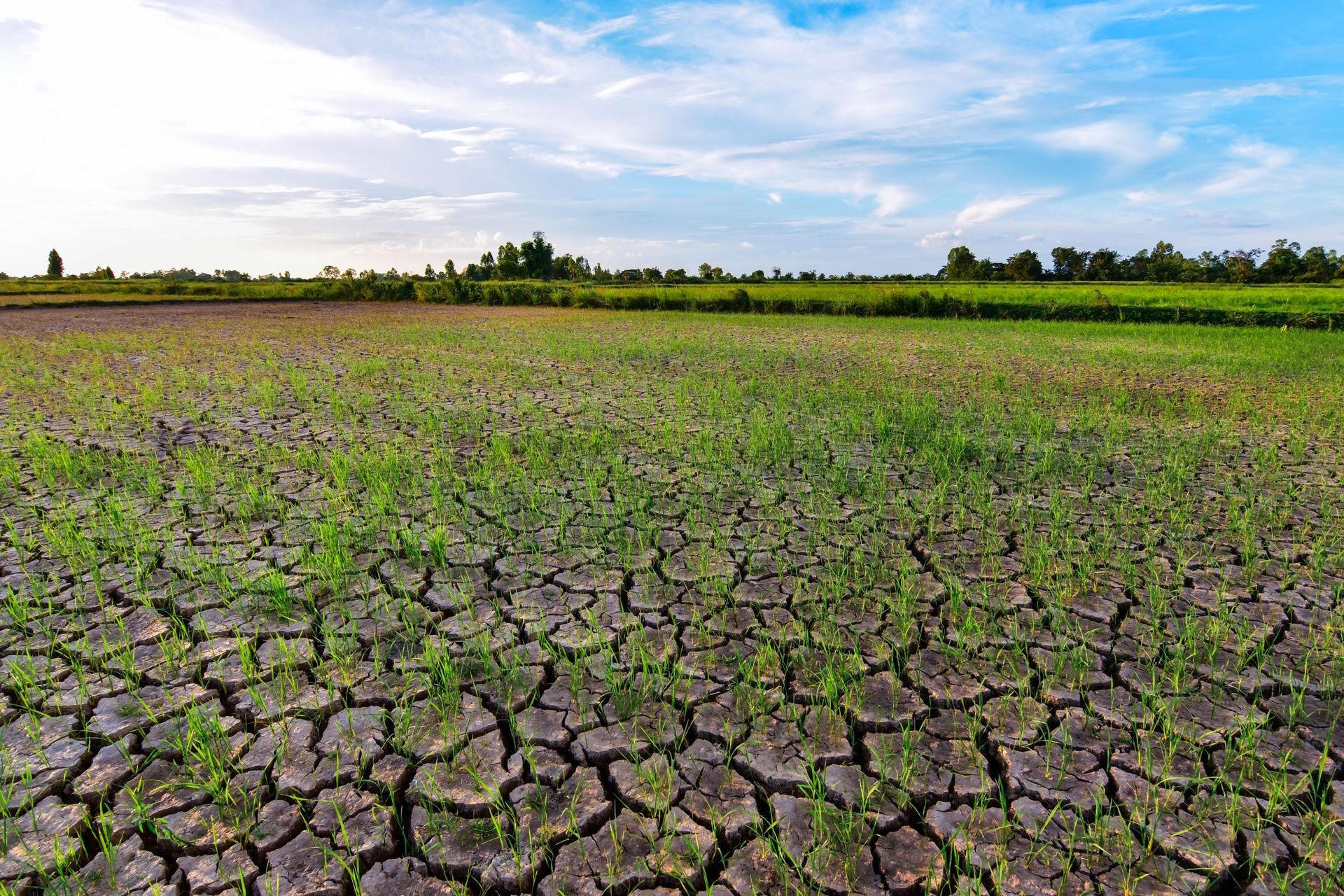
While summer 2026 will be remembered for its exceptional heat, the season's longest dry spells highlight just how unusual the past few months have been.
Across parts of southern England, several weather stations went almost two months without recording measurable rainfall before the recent unsettled weather finally brought those dry spells to an end.
The end of these rainless streaks marks a significant change in the weather pattern, but the statistics provide a striking snapshot of the prolonged lack of rainfall experienced across many areas since June.
Areas with the longest dry streaks
Wisley tops the list
The longest dry streak was recorded at Wisley in Surrey, where 62 consecutive dry days were observed between 17 June and this week’s breakdown of the dry weather pattern. This means the site went more than two months without recording measurable rainfall, making it one of the standout examples of the exceptionally dry conditions that developed across southern England this summer.
Heathrow and Odiham close behind
Second place is shared by Heathrow in Greater London and Odiham in Hampshire. Both stations recorded 56 consecutive dry days, with their dry spells beginning on 23 June. These figures underline how widespread the dry conditions became across the south of England, extending well beyond a single county or region.
Dorset sees prolonged dry weather
Preston in Dorset recorded 53 consecutive dry days from 26 June, placing it fourth on the list. The Dorset coast has been one of several areas where rainfall repeatedly missed communities for weeks at a time, even when nearby locations occasionally experienced showers.
Hampshire features again
South Farnborough in Hampshire completes the top five, recording 52 consecutive dry days from 27 June. Having two Hampshire sites among the five longest dry streaks highlights how persistent the lack of rainfall was across parts of southern and southeastern England.
Several other locations also recorded notably long dry spells. Coningsby in Lincolnshire and Northolt in Greater London each reached 51 consecutive dry days, beginning on 26 and 27 June respectively. Andrewsfield in Essex recorded 50 consecutive dry days from 27 June, while Shoeburyness in Essex and Kew Gardens in Greater London each reached 49 consecutive dry days after their dry spells began on 28 June.
After an extraordinarily dry and hot summer widely across the UK - especially England and Wales - how much rain do we need to get back to normal? And how much rain will we get in the next few weeks?
— Met Office (@metoffice) August 18, 2026
Find out more in this deep dive with Aidan 👇https://t.co/JZMSOqrQxD pic.twitter.com/G2ejDLzBHV
How do these streaks compare to 1976?
The length of these dry spells is particularly notable when compared with the famous summer of 1976. The longest dry streak recorded that year among these sites was 51 consecutive dry days at Skokholm Island in Dyfed between 19 July and 7 September. Hayling Island in Hampshire recorded 44 consecutive dry days between 16 July and 28 August, while Lambourn in Berkshire, Southsea in Hampshire and St Catherine's Point on the Isle of Wight each recorded 43 consecutive dry days between 16 July and 27 August.
By comparison, Wisley's 62 consecutive dry days during summer 2026 comfortably exceeded these figures, while Heathrow and Odiham each reached 56 days and Preston, Cove House recorded 53 days.
A summer of heat and drought
The dry weather occurred alongside one of the most notable summers in recent UK weather history. Summer 2026 featured a number of significant heatwaves, including one in late June and another in mid-August, both of which saw temperatures reach or exceed 38°C. The June heatwave produced the earliest 38°C on record, while the August event was among the latest.
These heatwaves were linked to persistent areas of high pressure positioned close to or just east of the UK. These systems encouraged sinking air, suppressed cloud formation and allowed long periods of sunshine to develop, creating ideal conditions for temperatures to rise and rainfall to remain scarce.
Why did the dry streaks become so long?
The main reason for the prolonged dry weather was the persistence of weather patterns that repeatedly kept the wettest conditions away from the areas most in need of rain. Through much of July, rainfall was largely restricted to northern parts of the UK, while southern England often received little more than isolated showers.
Even when the UK experienced more unsettled spells, rainfall was often unevenly distributed. During summer, showers can be highly localised, meaning one location may receive heavy rain while another nearby remains completely dry. Repeated over several weeks, this pattern can quickly create substantial rainfall deficits.
The situation was compounded by above-average sunshine and consistently high temperatures. Strong sunshine increases evaporation from soils and vegetation, meaning moisture is lost more rapidly and larger amounts of rain are then required to reverse the effects of a prolonged dry spell.
READ MORE: Will we finally see some meaningful rain this week?
Relief arrives, but challenges remain
The recent arrival of rain has finally brought many of these dry streaks to an end. However, while the change to more unsettled weather is welcome, it does not immediately erase the effects of such a prolonged period without rainfall.
While this week's showers and spells of rain will provide some much-needed moisture, it is likely to take a longer period of wetter weather through late summer and autumn to fully replenish soils and water resources.
The end of the dry streaks therefore represents an important milestone, but also a reminder of just how extraordinary the summer of 2026 has been, not only for its heat, but for the remarkable lack of rain, particularly across large parts of southern England.
Keep up to date with weather warnings, and you can find the latest forecast on our website, on YouTube, by following us on X and Facebook, as well as on our mobile app which is available for iPhone from the App store and for Android from the Google Play store.