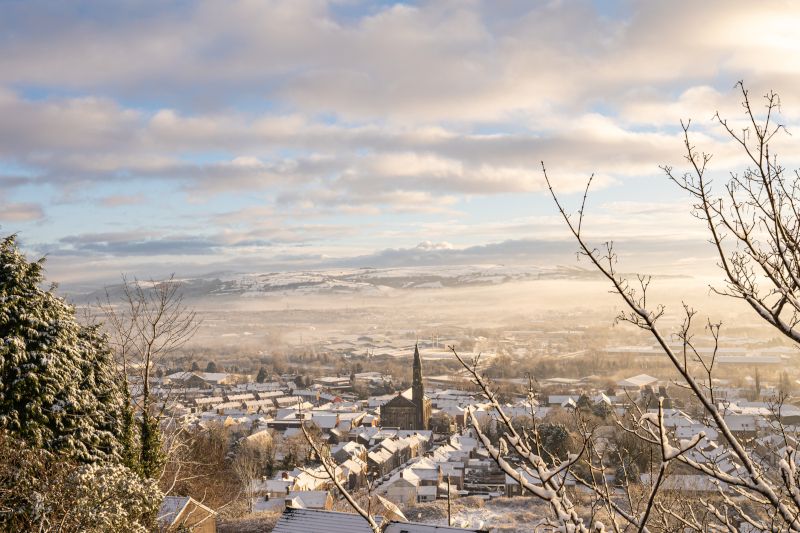
As spring sunshine begins to emerge, many of us are still reflecting on the winter just passed, one that may not have broken national records, but nonetheless stood out for its unusual patterns, striking contrasts and significant local impacts.
This week’s deep dive explores the key features of the season, the atmospheric drivers shaping it, and how these shifts translated into rainfall, wind, snow and storms across the UK.
A winter shaped by unusual wind patterns
One of the defining characteristics of this winter was the long‑lasting and atypical nature of its prevailing winds. Traditionally, the UK’s winter weather is dominated by south-westerly and westerly winds, bringing Atlantic systems, regular rainfall and comparatively mild conditions.
However, this year saw something markedly different. A prolonged spell of southeasterly winds developed from late January through to mid‑February, lasting nearly three weeks. Such persistence is extremely rare; south-easterlies typically appear only for a few days at a time. Their presence had a profound influence on the distribution of rainfall and temperature across the country.
While early January began with a cold, crisp spell driven by north-westerly winds, the shift to south-easterlies resulted in a weather pattern that became stuck in place for much of the latter part of the season. These winds helped steer moisture‑laden systems toward eastern Scotland, central England and parts of Northern Ireland, while leaving western Scotland unusually dry.
The role of the jet stream and blocked patterns
Another key factor behind the winter’s unusual behaviour was the position and strength of the jet stream. This fast‑moving ribbon of air in the upper atmosphere often dictates the path of low‑pressure systems. During the winter, colder‑than‑usual Arctic air pushed unusually far south across North America. This amplified the temperature contrast between air masses, strengthening the jet stream and nudging it southwards.
A blocked pattern then developed over Scandinavia, preventing weather systems from progressing eastwards. As low‑pressure systems approached the UK, they repeatedly met this barrier, resulting in a conveyor belt of slow‑moving, moisture‑laden systems affecting the same areas day after day.
This setup led to a relentless spell of rainfall for many, especially from early January through much of February, saturating ground, topping river catchments and leaving little opportunity for recovery between events.
READ MORE: What is the jet stream and how does it affect our weather?
Rainfall: a season of extremes and striking contrasts
Rainfall totals varied dramatically by region. While the winter was not the wettest on record for the UK as a whole, several counties experienced their wettest winter on record, and many more ranked within their top five.
A broad swathe stretching from Cornwall through central England and into eastern Scotland repeatedly saw heavy, persistent rainfall. Parts of southeast Northern Ireland were also exceptionally wet, reflecting the unusual southeasterly flow that pushed systems against higher ground and enhanced rainfall through orographic uplift.
By contrast, western Scotland, normally one of the wettest parts of the UK, experienced prolonged dry spells. In Aultbea, Northwest Highlands, 21 consecutive dry days were recorded between late January and mid‑February. At the same time, locations not far away in eastern Scotland recorded extremely high rainfall over short distances, highlighting how terrain and wind direction can create sharp rainfall gradients.
For instance, Aberdeen recorded around 120mm of rain in the first nine days of February, while Aviemore, protected by mountains, saw only about 2mm during the same period. These contrasts illustrate the profound effect of flow direction on local weather patterns.
Sunshine, dull days and the psychological impact of persistence
Beyond rainfall totals, the relentlessness of the pattern had a significant impact on how the season felt. Many areas experienced long runs of consecutive rainy days, especially in regions like Cornwall, where more than 30 consecutive days with at least 1mm of rain were recorded. This led to day-after-day of grey skies and limited sunshine, contributing to the sense of a particularly gloomy winter.
December itself was relatively typical in terms of rainfall, but as the new year began, clear and cold conditions quickly gave way to a sustained unsettled spell. Although average national statistics may not capture the lived experience of drab skies and saturated ground, the persistence of particular weather types made the winter feel remarkably unvaried.
Storms: the role of named systems and their impacts
Several named storms affected the UK through the season, each with differing levels of severity and impact.
Early in the winter, a storm brought significant flooding to parts of South Wales, particularly Monmouth, where saturated ground from already wet conditions worsened the effects. Later, strong winds associated with another system brought widespread impacts across coastal regions, with gusts exceeding 99mph recorded in some locations, one of the strongest in decades.
The addition of storm naming has significantly improved public messaging and preparedness, helping people take action ahead of severe weather. The benefits of consistent communication were particularly evident during storms affecting Cornwall and the Isles of Scilly, where timely messaging helped reduce the risk of serious harm.
Storm activity also interacted with longer‑term saturated conditions, meaning that even storms of moderate strength could create substantial impacts. For communities that had already experienced weeks of wet weather, even short periods of heavy rain or strong winds increased the risk of flooding, infrastructure damage and transport disruption.
READ MORE: February & Winter weather stats: A regional breakdown
Snowfall: a reminder of winter’s variability
Although long‑term trends point toward warmer winters and fewer widespread snow events, the season did bring notable snowfall, particularly across the Grampians and parts of northern and eastern Scotland. Depths reached around 50cm in places, making it the most significant accumulation in the region since December 2010.
These events demonstrated that despite a warming climate, significant snowfall remains possible when wind direction, air mass and local geography align. Episodes of lying snow cause substantial impacts, from transport disruption to school closures, and can be especially challenging when they occur infrequently, as communities have less recent experience in managing such conditions.
Understanding records and long‑term climate trends
Assessing the winter within a long‑term climate context requires reliable, consistent observation networks. Modern rainfall and temperature maps are based on high‑resolution gridded datasets derived from thousands of observations, ensuring that records from the 1800s can be fairly compared with those of today.
This robustness allows meteorologists to identify when a season ranks among the wettest, driest or mildest on record, even when the underlying observation network has changed over time. Such datasets are vital in understanding how the UK’s climate is evolving, informing everything from flood planning to national climate policy.
You can find the latest forecast on our website, on YouTube, by following us on X and Facebook, as well as on our mobile app which is available for iPhone from the App store and for Android from the Google Play store.