A spell of warm, dry and sunny weather has led to rising pollen levels across much of the UK this week.
These conditions are particularly favourable for pollen release and dispersal, meaning many people are likely to notice an increase in hay fever symptoms. While some changes in the weather later in the week may ease pollen levels slightly, high or very high levels are expected to persist for several days, especially in central and southern areas.
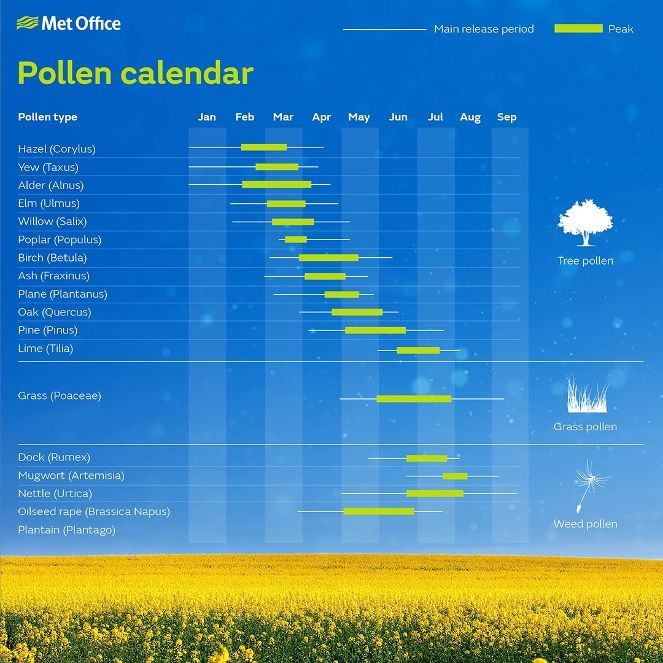
This week also marks a key point in the tree pollen season, with birch pollen becoming increasingly dominant, alongside ongoing ash pollen and the early beginnings of oak pollen.
Why pollen levels are high this week
Weather plays a crucial role in both how much pollen is produced and how effectively it spreads. The recent pattern of warm temperatures, sunshine and dry conditions has encouraged trees to release pollen in large quantities. In addition, breezy conditions help pollen grains disperse more widely and remain airborne for longer, increasing exposure.
Warm conditions stimulate pollen development within catkins, while dry air allows pollen to be released more easily. Without rainfall to wash pollen out of the air, levels can steadily build from day to day, which is what many people are experiencing now.
Pollen levels are currently at their highest this week and are expected to remain high, or even very high, through to Friday. Falling temperatures and the increasing risk of showers into the weekend may help reduce levels slightly, but high pollen levels are still possible, particularly during any dry and bright spells.
Which pollen types are affecting people now
We are currently in the middle of the birch and ash pollen seasons. Birch pollen is now becoming the dominant type and tends to affect a large number of people, often causing more widespread symptoms than ash. Ash pollen levels have already been high, particularly in southern parts of the UK, and the peak is now gradually shifting northwards.
Oak pollen is also just beginning to emerge. While it has not yet reached peak levels, it can still contribute to symptoms, especially for people who are sensitive to multiple pollen types.
Plane pollen may also be present, particularly in urban areas where plane trees are commonly planted. Although it affects fewer people overall, it can still be a trigger for some individuals.
Have you been sneezing a lot today? 🤧
— Met Office (@metoffice) April 7, 2026
You may have been suffering with hay fever. It's the peak of the tree pollen season and levels of ash and birch pollen will remain very high across England and Wales through the rest of the week 🌳 pic.twitter.com/pSMAZndOjw
How weather conditions influence pollen
Different elements of the weather affect pollen in different ways. Warm, wet weather earlier in the season supports plant growth and pollen development. Once pollen is ready to be released, warm and dry conditions with a light breeze are ideal for dispersal.
Rainfall has the opposite effect in the short term. During and immediately after rain, pollen levels usually drop as pollen grains are washed out of the air and deposited on the ground. However, once conditions dry out again, levels can rise quickly, especially if plants have continued producing pollen.
This means pollen levels can fluctuate significantly from day to day, depending on the timing of rain and sunshine.
Is this the worst weather for hay fever?
For most hay fever sufferers, the worst conditions are warm, dry and breezy days. These allow pollen to be released easily and spread efficiently through the atmosphere. Calm, dry days can also lead to high levels locally, as pollen accumulates near the source.
By contrast, cooler conditions, higher humidity and rainfall tend to reduce airborne pollen, at least temporarily.
Daytime versus night‑time symptoms
Hay fever symptoms are often worse during the day, although this is not always the case. Pollen levels usually rise during daylight hours when sunshine, warmth and breezes are more common. Overnight, cooler temperatures and higher humidity can allow pollen to settle, leading to lower levels by early morning.
However, pollen can remain elevated if conditions stay warm and dry overnight, and exposure indoors can still occur even when levels outdoors are falling.
Pollen indoors
Being indoors does not always mean avoiding pollen. Pollen grains are easily carried inside on clothing, hair and pets, and they can also enter through open windows and doors. As a result, people may continue to experience symptoms even when spending most of their time indoors.
READ MORE: Storm Dave in context: How the storm unfolded
Looking ahead through the week
For the remainder of this week, pollen levels are expected to stay high or very high across many areas, particularly in any dry and sunny conditions. As the peak of the ash season moves north and birch pollen continues to increase, central and southern parts of the UK are likely to see the highest levels.
Into the weekend, cooler weather and a higher chance of showers should help bring pollen levels down slightly. However, during brighter and drier intervals, high levels are still possible. Regional variation will remain significant, with generally lower levels expected in parts of Scotland compared to the south.
Met Office Senior Scientist, Lucy Neal, said: “We’ve seen a rise in pollen levels this week as a result of the warm, dry and sunny weather, combined with light to moderate breezes. These conditions are ideal for trees to release pollen and for it to be carried longer distances. Levels of Birch pollen are currently high and this tends to affect a large proportion of hay fever sufferers. Ash pollen has also been high, particularly in southern areas, while oak pollen is starting to emerge as the season progresses.
“Pollen levels are highest in dry, warm conditions, and while cooler weather or showers later in the week may bring temporary relief, levels can quickly rise again once conditions dry out. Anyone affected by hay fever should be prepared for continued high or very high pollen levels over the next few days, especially during sunny spells.”
How do I access the Met Office Pollen forecast?
You can access our pollen forecast on the or .
You can also keep up to date with weather warnings, and find the latest weather forecast on our website, on YouTube, by following us on X and Facebook, as well as on our mobile app which is available for iPhone from the App store and for Android from the Google Play store.