Pollen levels over the next five days are expected to show a clear north–south split across the UK.
Northern areas, including Scotland, Northern Ireland and parts of northern England, will largely experience low pollen levels throughout the period. Conditions here remain generally less favourable for pollen release, keeping levels consistently low from day-to-day.
Further south, pollen levels will be more variable and at times higher, particularly due to grass pollen, but with some weed pollen also around. Across the Midlands, eastern England, and southern regions, levels are expected to rise from moderate to high, with the highest values likely on Friday and again over the weekend.
London and the south-east, along with parts of the East Midlands and East of England, are likely to see several days of high pollen counts before a slight easing into early next week.
Western areas such as Wales and north-west England will see fluctuating levels, with a mix of moderate, high and occasional lower values as weather systems move through.
Overall, the highest pollen risk will be across central and southern parts of the UK.
The pollen forecast is updated each day here.
READ MORE: How does weather affect pollen and can pets get hay fever?
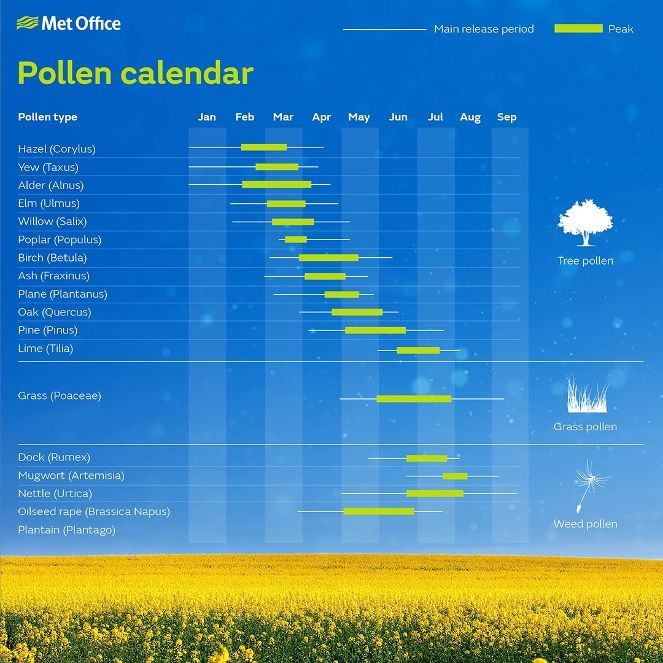
What are the different types of pollen?
If you're a hay fever sufferer, it helps to understand which type of pollen affects you and when it's likely to be in the air. The UK pollen season typically follows the below pattern, but the seasons can start earlier or run later depending on where you live in the UK and what the weather's doing.
How do I access the Met Office Pollen forecast?
You can access our pollen forecast on the Met Office website or download our app to get pollen alerts sent straight to your phone.
You can also keep up to date with weather warnings, and find the latest weather forecast on our website, on YouTube, by following us on X and Facebook, as well as on our mobile app which is available for iPhone from the App store and for Android from the Google Play store.