When we think about weather forecasting, we often focus on the science: temperatures, rainfall totals, wind speeds and weather warnings. But what about the language used to describe the weather?
That was the subject of a recent Met Office Deeper Dive, featuring Alice Stevens, a designer, researcher and senior lecturer at Arts University Bournemouth, whose work explores how language shapes our relationship with weather and the environment.
Her research sits within the field of eco-linguistics, which examines the role language plays in shaping the relationship between people, nature and the wider environment. For Alice Stevens, the question is simple but profound: how does the way we talk about weather influence how we feel about it?
The power of weather language
Weather is one of the most common topics of conversation in the UK. Forecasts are designed to inform, but the words used can also shape perceptions.
As Alice explains, language doesn't just describe our experiences - it helps create them. Her interest in eco-linguistics stems from the idea that "language informs culture", influencing how we understand and interact with the world around us.
For weather communicators, that presents an interesting challenge. The same forecast can be delivered in different ways, with different audiences taking away different messages.
"We're communicating the weather," explained Met Office presenter and meteorologist, Alex Deakin, leading the discussion. "The importance of language and what you say is really, really vital in what people take away from any given forecast."
READ MORE: Marine heatwaves: why warm seas matter for UK weather
Rethinking our relationship with rain
A central theme of the discussion was whether the UK has developed what Alice Stevens calls an "only sunny weather is good" narrative.
This matters because observations and climate projections indicate that UK winters are becoming wetter. Alice Stevens noted that winter half-years are already significantly wetter than they were several decades ago, with further increases projected in future.
Rather than seeing rain solely as something to avoid, she argues there is value in building healthier relationships with rain and other everyday weather conditions.
"The problem with having an only-sunny-weather-is-good narrative is that it could lead us to feel dissatisfied with what we have in the UK," said Alice. "I'm really looking at language and how we can build better relationships with safely habitable rain conditions."
Her argument is not about celebrating severe weather. Warnings remain important, and hazardous weather should always be taken seriously. Instead, she suggests reconsidering how we describe ordinary, everyday rain.
Finding joy in rainy days
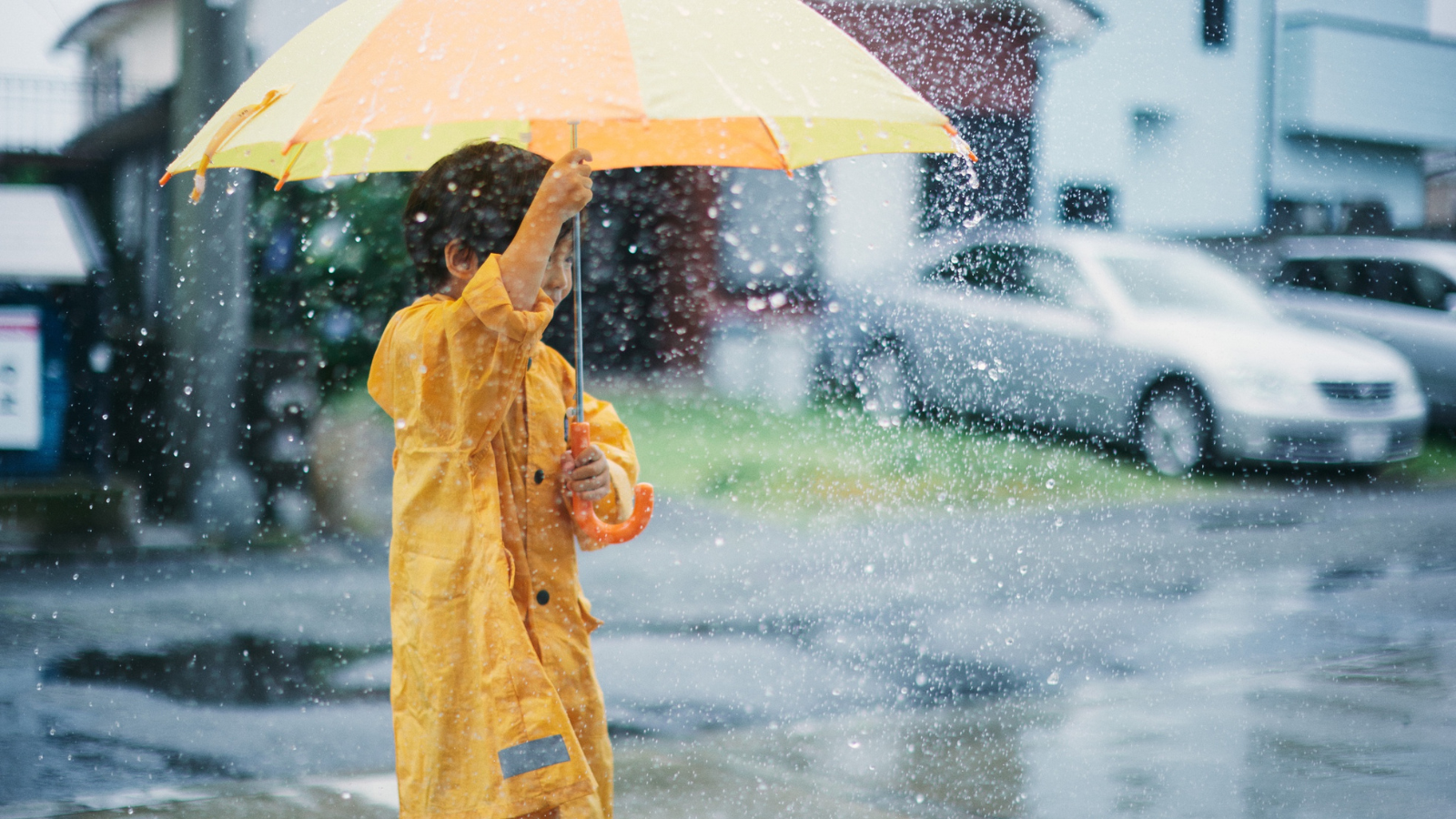
Many of us have fond childhood memories of jumping in puddles, exploring outdoors and enjoying rainy weather without a second thought.
Alice believes something changes as we get older. "Some people reflect back and say, actually, I didn't used to mind rain as a kid," she explained. "I don't really know what's happened, why rain has become something to avoid."
That observation inspired much of her creative work, which aims to help people reconnect with positive experiences of weather. One project invited visitors to explore nature wearing bright yellow audio Wellington boots that responded to changing weather conditions with poetry specifically written for the landscape.
Another project, called "Pluvilor", uses specially designed umbrellas that play recordings of people's positive memories associated with rain. These range from childhood adventures and family experiences to stories of outdoor swimming and personal reflection.
READ MORE: Will the heat return?
A changing climate, a changing conversation
The discussion also touched on how weather communication may evolve alongside a changing climate.
Today's forecasts must balance scientific accuracy with public understanding. Forecasters need to explain impacts, communicate uncertainty and help people make informed decisions. At the same time, language influences whether people view weather as something to fear, tolerate or embrace.
Alice Stevens believes weather communicators are uniquely placed to influence that conversation.
"Language is not passive," she said. "The facts are it is getting wetter. We need to do something about it."
This doesn't mean changing the science. Instead, it may involve thinking more carefully about the words used to describe familiar weather patterns.
Looking beyond the forecast
Weather has always been part of daily life in the UK, and talking about it remains one of the nation's favourite pastimes. But the discussion with Alice Stevens suggests there may be value in paying closer attention not just to what the weather is doing, but to how we talk about it.
As our climate changes and weather patterns evolve, language will continue to play an important role in helping people understand and adapt.
Perhaps the next time there's a little drizzle in the air, it might be worth seeing it not simply as bad weather, but as another part of the UK's rich and ever-changing weather story.
You can find the latest forecast on our website, on YouTube, by following us on X and Facebook, as well as on our mobile app which is available for iPhone from the App store and for Android from the Google Play store.