As weather becomes increasingly influential on everything from infrastructure to supply chains, the ability to generate, process and share high quality weather intelligence at speed is critical.
This is why the Met Office’s partnerships with organisations such as AWS and Microsoft have grown into something far more significant than a technology programme, it's a means to collectively find common ground in order to enhance national resilience and global decision-making.
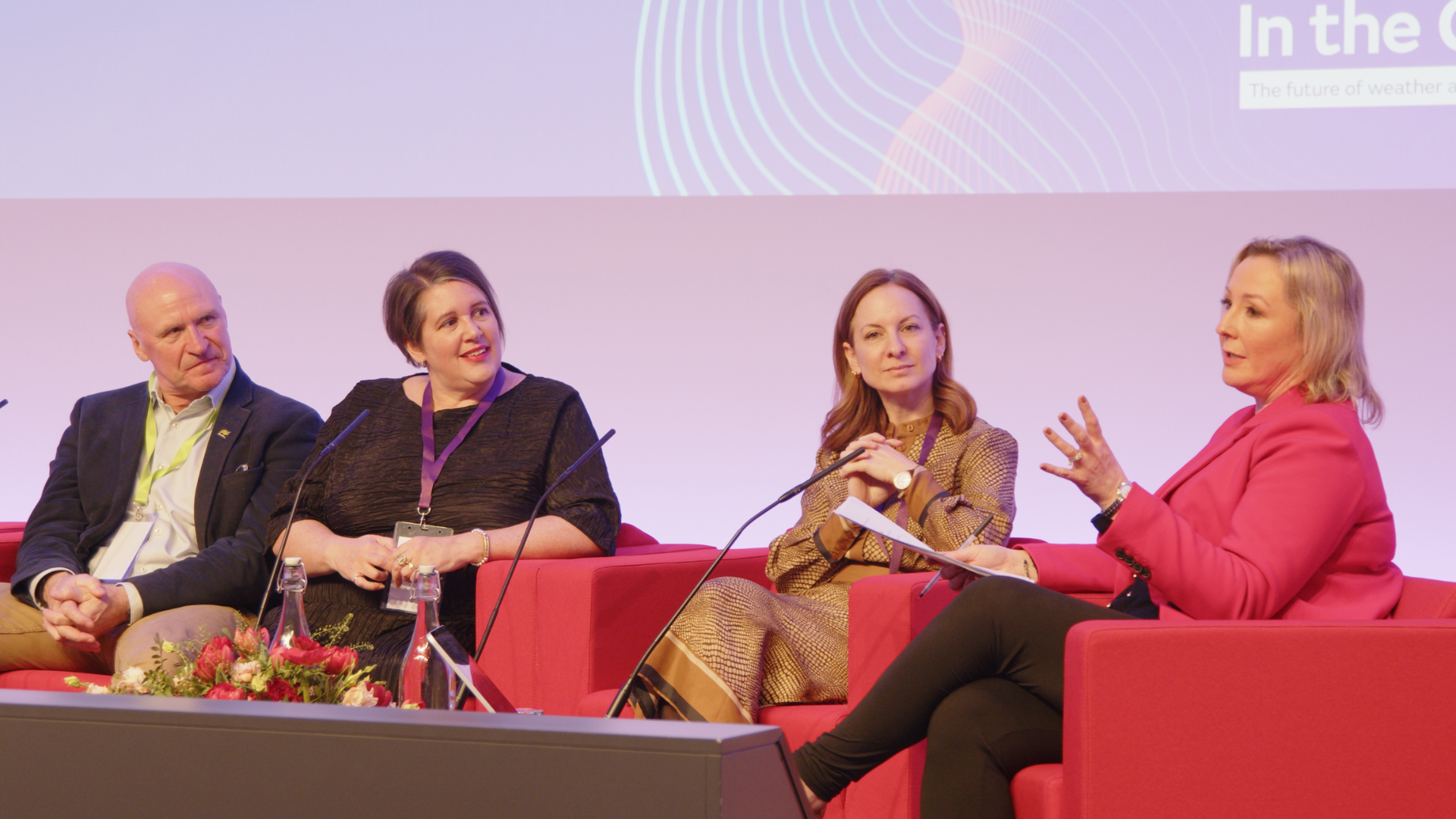
The theme of collaboration took centre stage at the Met Office in the Cloud event in London earlier this month, where leaders from government and industry came together to explore how combined expertise can drive more effective outcomes.
The first of four panel sessions at the event highlighted how partnerships between the Met Office, AWS, and Microsoft are transforming the delivery of real-time weather and climate services through deeper, more agile collaboration.
Harnessing the power of the cloud
The increasing complexity of weather models and the growing demand for real-time data requires infrastructure that can scale rapidly and reliably. Cloud platforms provided by AWS and Microsoft allow the Met Office to innovate at pace, removing traditional limitations and enabling meteorologists, scientists and engineers to experiment with and refine new systems far more quickly than before. Whilst innovation is not defined by AI, it is a current catalyst that is driving this pace of innovation.
Cloud abstraction, understanding what needs to be built in‑house and where partners can deliver better value, is central to this. Rather than investing effort in solving challenges that cloud platforms are already optimised to handle, the Met Office can focus on its core expertise: generating world‑class forecasts and environmental insights. This shift enables more rapid development cycles, more efficient experimentation and a more resilient operational environment.
Speaking at the Met Office in the Cloud event, Charlie Ewen, Chief Data and Information Officer at the Met Office, said: “As an engineer, I represent this culture where it is particularly difficult to let go of things that you are justifiably proud of and have delivered over decades. But the reality is that things are scaling to the point where you just can’t do it all.”
“Culturally, it’s about recognising that we don't need to do everything ourselves, and that there are others that can do some things at least as well as we do."
Erin Chapple, CVP of Commercial Solution Areas at Microsoft, said: “The boundaries are being redrawn. If you go back 10-15 years the boundary around an organisation was much more permanent, things were done in isolation, independently. But those boundaries are now being drawn around multiple companies and organisations, so you have to start thinking differently about what a team actually is and how you take leadership, teamwork, and collaboration, and find ways to scale them across organisational boundaries.
“Otherwise, you’re going to end up investing in things that someone else does better and have less of your own resources to focus on the things that are really important to you.”
READ MORE: A year of cloud-powered weather forecasting: how the UK’s national capability is evolving
Collaboration that drives innovation
Innovation rarely succeeds in isolation. The partnership works because teams from all sides, engineers, meteorologists, architects, come together frequently, openly and with curiosity. Ideas are tested quickly, lessons are shared honestly and everyone involved brings their own expertise into the mix.
Holly Ellis, Director for UK, International Organisations & Germany Public Sector Technology at AWS, said: “It's about working together as a multi-disciplinary, and multi-organisation team and really understanding the outcomes everyone is collectively working towards. That genuine partnership means understanding what does and doesn't work along the way, and iterating together.”
“The solution architecture team I lead, are at a point where it’s hard to distinguish between who is AWS and who’s Met Office, because we’re really embedded together and working on a shared mission.”
Erin Chapple said: “This is a first, in terms of building a supercomputer of this class and scale, nobody has done this before, and as Charlie mentioned, it started out as a contract in pre-Covid 2019. We started out having face-to-face meetings and conversations to having to deliver the majority of this completely remotely and independently, and so you just can’t predict the pace of change.
“Even over the past year the pace of change has accelerated 10-fold in terms of what is changing. When this happens, the communication between the teams ends up being the most important thing. I think this is a really great example of how you can have innovation across the private and public sectors.”
A future shaped by partnership
As technology evolves, so too does the potential for weather and climate intelligence. AI is accelerating, models are becoming more sophisticated, and expectations for timely, high-quality information continue to grow. Meeting these demands requires deep collaboration, shared investment and the willingness to learn together.
The partnerships between the Met Office, AWS and Microsoft is proving that when organisations unite around a common mission, they can unlock extraordinary possibilities. Whether exploring new forecasting capabilities, strengthening critical services or enabling groundbreaking research, the collaboration is helping shape a future where weather intelligence becomes even more accessible, actionable and impactful.
The speakers were talking at Met Office in the Cloud; a technology event bringing together leaders from across industry and government.