The Met Office pollen forecast will go live on Thursday 19 March.
You can access the five-day pollen forecast on the Met Office website or download our app to get pollen alerts sent straight to your phone.
Lucy Neal, Senior Scientist at the Met Office said: "The Met Office’s five‑day pollen forecast will begin tomorrow (Thursday 19 March) on the Met Office website and app. With temperatures expected to be above average for many areas this week, the forecast indicates 'high' levels of alder pollen across Northern England and Scotland, although these will gradually reduce as the alder pollen season comes to an end.
"Meanwhile, ash pollen levels are gradually increasing in the South, with concentrations expected to reach 'moderate' by next week. The birch pollen season is also forecast to begin in southern areas later next week. The Met Office’s pollen forecast will run until mid‑September."
What pollen is and why it matters
Pollen is a fine powder released by plants during their reproductive cycle. These microscopic grains are transported by the wind, insects or animals to help plants reproduce. For some people, exposure to pollen can trigger allergic responses, commonly known as hay fever.
Although pollen is present throughout much of the year, the types and quantities in the air change with the seasons. Understanding the distinct phases of the pollen season can help people better anticipate when symptoms may begin and how to manage them.
Know the pollen season
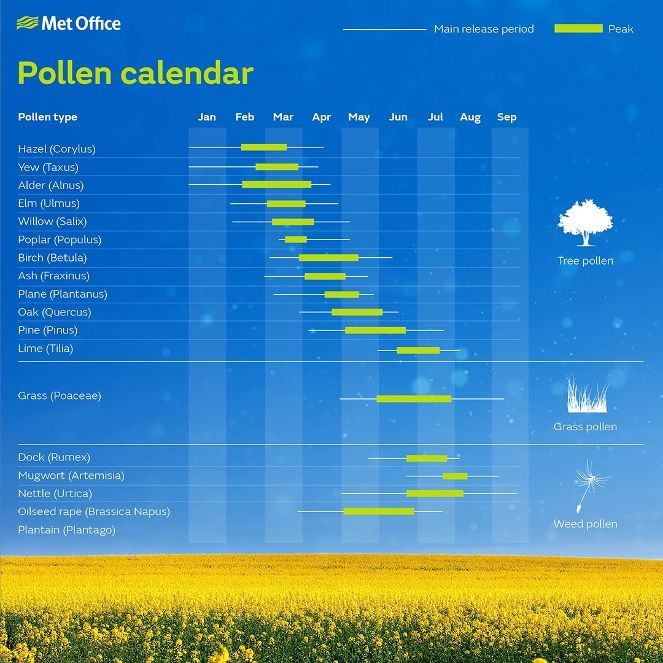
If you're a hay fever sufferer, it helps to understand which type of pollen affects you and when it's likely to be in the air. The UK pollen season typically follows the below pattern, but the seasons can start earlier or run later depending on where you live in the UK and what the weather's doing.
The three main types of pollen
While there are dozens of allergenic pollen types in the UK, almost all can be grouped into three main categories: tree pollen, grass pollen and weed pollen. Each type peaks at a different point in the year, giving the pollen season a distinct structure.
- Tree pollen
Tree pollen is the first major pollen type to appear each year. Its season usually runs from late March to mid‑May, although the exact timing can shift. Trees such as birch, oak and ash are among the most common sources.
Around a quarter of people with hay fever are sensitive to tree pollen. For those affected, early spring can be particularly challenging, especially during warm, dry spells when pollen disperses easily.
- Grass pollen
Grass pollen is the most common allergen, affecting the majority of hay fever sufferers. Its season spans from mid‑May to July and typically features two peaks. The first and largest peak often occurs in early June, followed by a smaller peak in early July.
Because grass pollen affects the majority of hay fever sufferers, this part of the season is usually when symptoms are most widespread.
- Weed pollen
Weed pollen becomes more prominent later in the year and can be released any time from early spring to late autumn. Its main season generally runs from late June through September. Weeds such as nettle, mugwort and plantain are common contributors.
Although fewer people are allergic to weed pollen compared with grass pollen, its long season means symptoms can persist into early autumn, especially during dry, breezy spells when pollen dispersal is strongest.
READ MORE:10 things you should know about pollen
What role does the weather play?
Weather plays a huge role in both how much pollen is produced and how it spreads. Rain, wind, temperature and sunshine all affect pollen levels in different ways:
-
Warm, wet weather promotes pollen production.
-
A warm, dry day with a light breeze helps spread pollen through the air.
-
Rain can wash pollen from the air, temporarily reducing levels.
-
Urban areas typically have lower pollen counts than rural areas, but city pollution can make symptoms worse when combined with pollen.
READ MORE: How does weather affect pollen and can pets get hay fever?
Preparing for the season ahead
It’s helpful to plan ahead if you are prone to hay fever. Keeping an eye on daily pollen forecasts can offer early warning when levels are expected to rise. Simple measures such as closing windows during high‑count periods, showering after time outdoors and regularly cleaning surfaces can all help reduce exposure.
For more persistent symptoms, many people find relief from over‑the‑counter treatments, though advice from a pharmacist or GP can help determine what works best.
As the season gets underway, staying informed and prepared can make a significant difference.
READ MORE:Surviving hay fever: A guide for sufferers
You can find the latest forecast on our website, on YouTube, by following us on X and Facebook, as well as on our mobile app which is available for iPhone from the App store and for Android from the Google Play store.