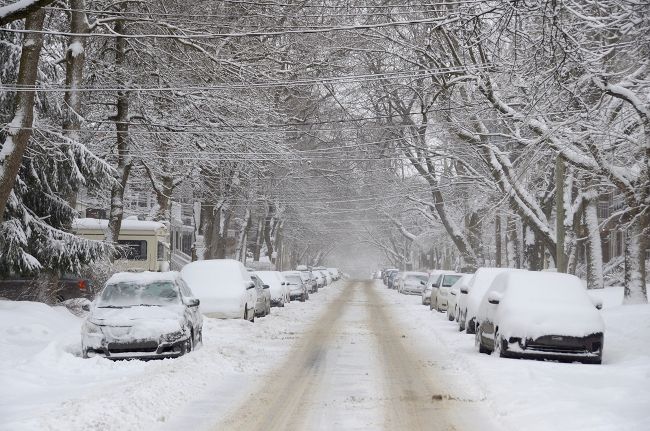
January is a month that often tests the UK’s resilience to weather.
Sitting at the heart of winter yet increasingly influenced by shifting climate patterns, it delivers an array of extremes, from record‑breaking warmth to significant snowfall, intense rainfall to powerful winds.
Using the Met Office’s long‑term records across the UK nations, this article explores just how wide‑ranging January’s conditions can be.
Temperature extremes: from winter warmth to severe cold
January has delivered some remarkable temperature contrasts, not least in recent years. The UK’s highest January temperature on record stands at 19.9°C, reached at Achfary, Sutherland, in Scotland, on 28 January 2024. England’s warmest January day is, 17.6°C at Eynsford, Kent, on 27 January 2003, while Wales’s peak value of 18.3°C at Aber, Gwynedd, has been recorded twice in 1958 and 1971.
Yet January’s warmth contrasts sharply with its capacity for severe cold. The lowest UK January temperature on record was –27.2°C, logged at Braemar, Aberdeenshire, on 10 January 1982. In England, the lowest minimum was –26.1°C at Newport, Shropshire, also in January 1982, a reminder of the intensity of the early‑1980s cold spells.
READ MORE: The year in weather: 2025
Wales’ lowest daily recorded minimum temperature was -23.3°C at Rhayader (Powys) on 21 January, 1940, while Northern Ireland saw -17.5°C at Magherally (County Down) on 1 January 1979, underscoring that extreme cold is not restricted to Scotland alone.
You can explore temperature data below using our interactive graphic. Click on a date to see the record for that year.
Wind extremes: powerful winter storms
January is a month with many past severe wind events., with several of the UK's highest gusts recorded during midwinter storms. The UK’s strongest January gust stands at a striking 124mph, recorded at Kilkeel, County Down, in Northern Ireland, on 12 January 1974.
England’s strongest January gust, 115mph at The Needles, Isle of Wight, on 4 January 1998, was associated with a deep Atlantic low that delivered widespread disruption across southern Britain.
Scotland saw 120mph at Sumburgh, Shetland, on 23 January 1994, while Wales experienced 107mph at Aberporth, Dyfed, on 25 January 1990. These powerful winds typically occur when the jet stream intensifies over the Atlantic, driving deep depressions into the UK.
You can explore max gust data below using our interactive graphic. Click on a date to see the record for that year.
Pressure extremes: from deep lows to exceptionally high values
January has produced both some of the UK’s deepest low-pressure systems and highest-pressure readings on record. Low-pressure in particular is closely tied to winter storm activity.
One of the UK's lowest January pressures was 925.6mb, recorded at Ochtertyre, Perthshire, on 26 January 1884, a figure associated with a powerful storm system. Northern Ireland’s recent record of 948.1mb at Magilligan, Londonderry, on 24 January 2025 highlights that recent winters continue to see notably deep lows.
READ MORE: Christmas weather extremes: Records from Christmas Eve to Boxing Day
In contrast, high-pressure extremes in January can bring settled, cold and often foggy weather. Scotland recorded 1053.6mb in Aberdeen on 31 January 1902, with similarly high values seen in England (1053.1mb in Falmouth, 1905) and Wales (1050.5mb in Mumbles, 2020). Such high-pressure systems can dominate for days, leading to cold, calm and often frost-laden weather.
Rainfall extremes: concentrated downpours and their impacts
While January often brings persistent rainfall, the month can also produce exceptionally intense daily totals. The UK’s highest daily rainfall record for January is 238.4mm, measured at Sloy, Dunbartonshire, on 17 January 1974. This value reflects the potential for strong Atlantic systems to stall against Scotland’s western mountains, amplifying orographic rainfall.
High-impact rainfall is not limited to the Highlands. England’s wettest January day, 180.4mm at Rydal Hall, Cumbria, on 7 January 2005, was part of a notably unsettled winter for the northwest. On the same day, Wales recorded 143.8mm at Capel Curig, a location renowned for its consistently high rainfall totals. Northern Ireland’s wettest January day came on 19 January, 1973 and saw 132mm fall on Ballymagherry (County Down).
These events show how January often sees deep low-pressure systems crossing the UK, bringing prolonged rainfall capable of flooding and transport disruption, a theme familiar to many communities in recent winters.
You can explore rainfall records using our interactive chart below.
Snow and sunshine extremes: winter’s quieter yet impactful elements
Snow remains a defining feature of January weather, even as trends shift with a warming climate. The deepest January snow depth on record for the UK is 112cm, observed at Leadhills, Lanarkshire, on 27 January 1984. Wales has seen depths up to 90cm at Cwmbargoed, Mid Glamorgan, on 10 January 1982, while England's maximum was 67cm at Kielder Castle, Northumberland, in 1987. These events highlight how prolonged cold spells can deliver significant snow accumulations, especially in upland areas.
Sunshine, often scarce in January, also shows variation. The UK’s sunniest January day reached 8.9 hours, recorded at Torquay, Dunkeswell, and Eastbourne in 1977, 1989, and 2004. Wales saw 8.6hrs at Moel-y-Crio, Clwyd, on 31 January 1987 & Aberporth (Dyfed) on 29 January 2011. Scotland experienced 8.4hrs at Kilmarnock (Ayrshire) on 30 January 1965 while Northern Ireland’s sunniest January day came on 30 January 1971 recording 8.2hrs in Strabane, County Tyrone.
These values demonstrate that even in midwinter, clear skies can briefly dominate when high pressure takes hold.
You can explore all of these records using our interactive graph below.
Keep up to date with weather warnings, and you can find the latest forecast on our website, on YouTube, by following us on X and Facebook, as well as on our mobile app which is available for iPhone from the App store and for Android from the Google Play store.