Fifty years separate the summer of 1976 from the summer of 2026, yet both have become defining weather stories of their time.
For decades, the summer of 1976 stood as the benchmark against which hot, dry UK summers were measured. Its prolonged heat, exceptional sunshine and severe drought made it one of the most memorable weather events in modern British history. But fifty years later, summer 2026 has rewritten the record books, becoming the UK’s warmest summer on record for mean, maximum and minimum temperatures, while also recording more tropical nights than 1976.
The summer everyone remembers
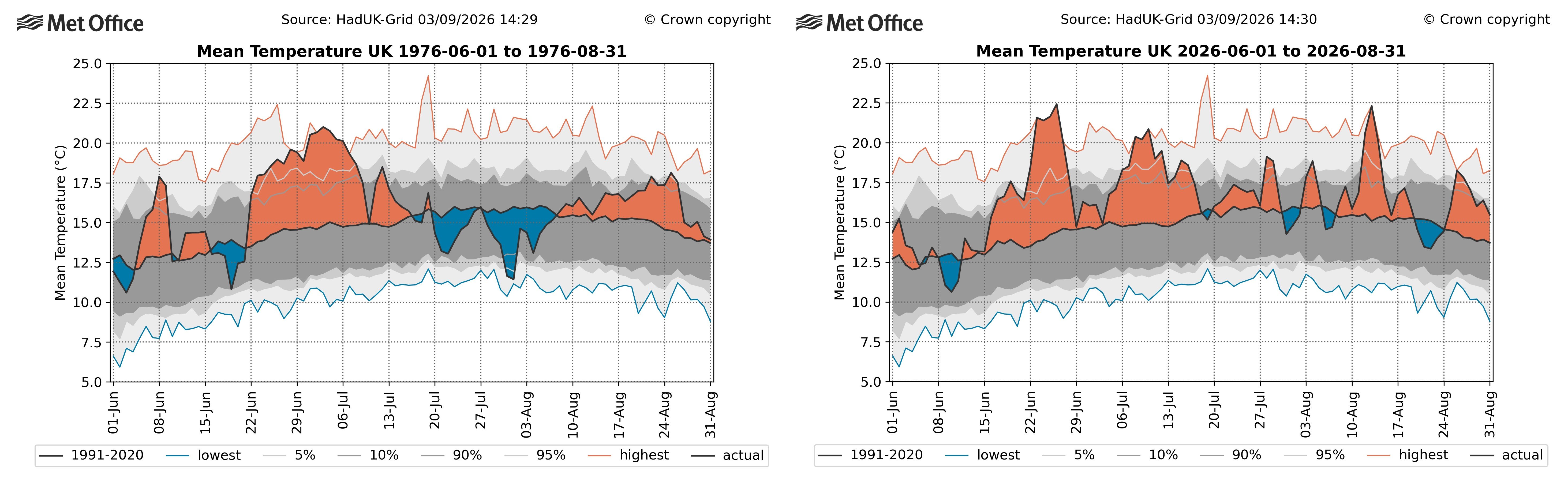
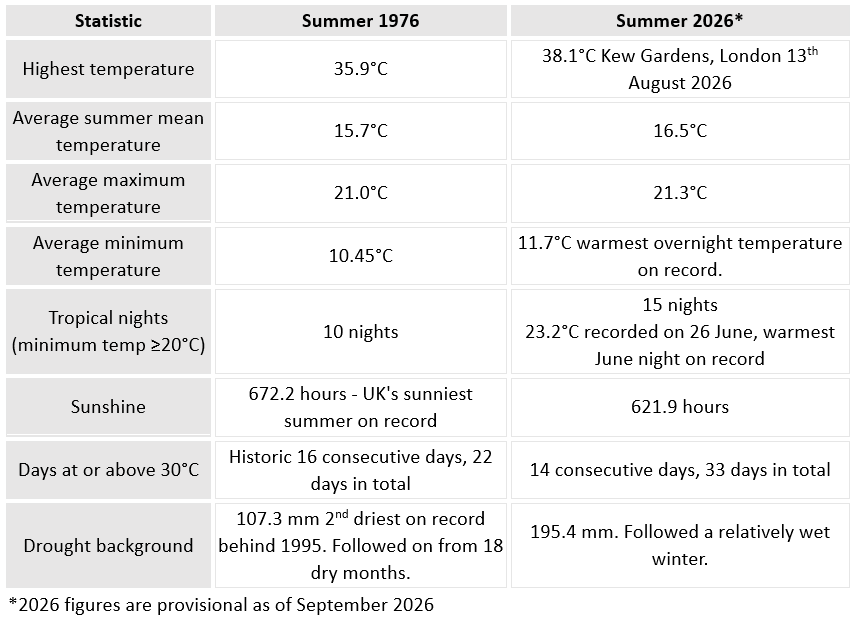
The summer of 1976 was characterised by prolonged heat and drought. Temperatures regularly exceeded 30°C across England, peaking at 35.9°C in Cheltenham on 3 July. The heat followed around 18 months of unusually dry conditions, allowing drought to build across much of the country. Water shortages led to standpipes in some communities, while crops were damaged, wildfires broke out and the government introduced emergency measures, including appointing a Minister for Drought.
What made 1976 exceptional was the persistence of the conditions. A blocking pattern of high pressure became established over the UK, bringing weeks of hot, dry and sunny weather. It remains the UK's sunniest summer on record and, for five decades, held the record for the highest UK average summer maximum temperature. Summer 2026 exceeded that benchmark, with a UK average maximum temperature of 21.3°C.
Summer 2026: rewriting the record books
Summer 2026 has not only rivalled 1976 but exceeded it in several ways.
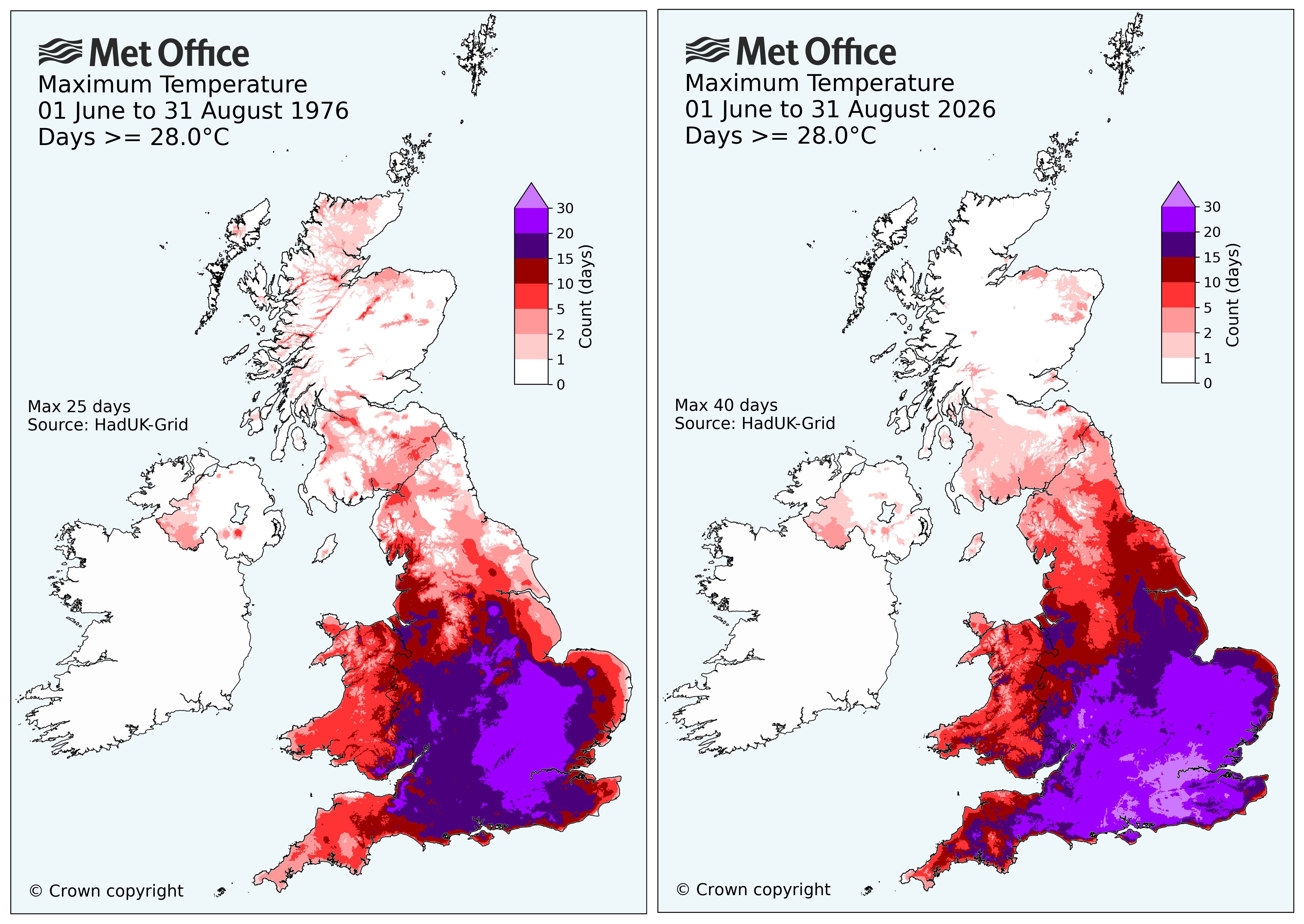
By 25 July 2026, the UK had already recorded more days above 30°C than occurred during the whole of summer 1976, when there were 22. By the end of summer 2026, that total had risen to 33 days above 30°C. Temperatures also reached 35°C in May, June, July and August for the first time on record, while a series of heatwaves brought exceptional and sustained warmth across much of the season.
The warmth was evident across the season. The UK's average summer temperature reached 16.5°C, which is 1.9°C above the long-term average, surpassing the previous record set in 2025. England and Wales also recorded their warmest summers on record by mean temperature, underlining how exceptional the season has been.
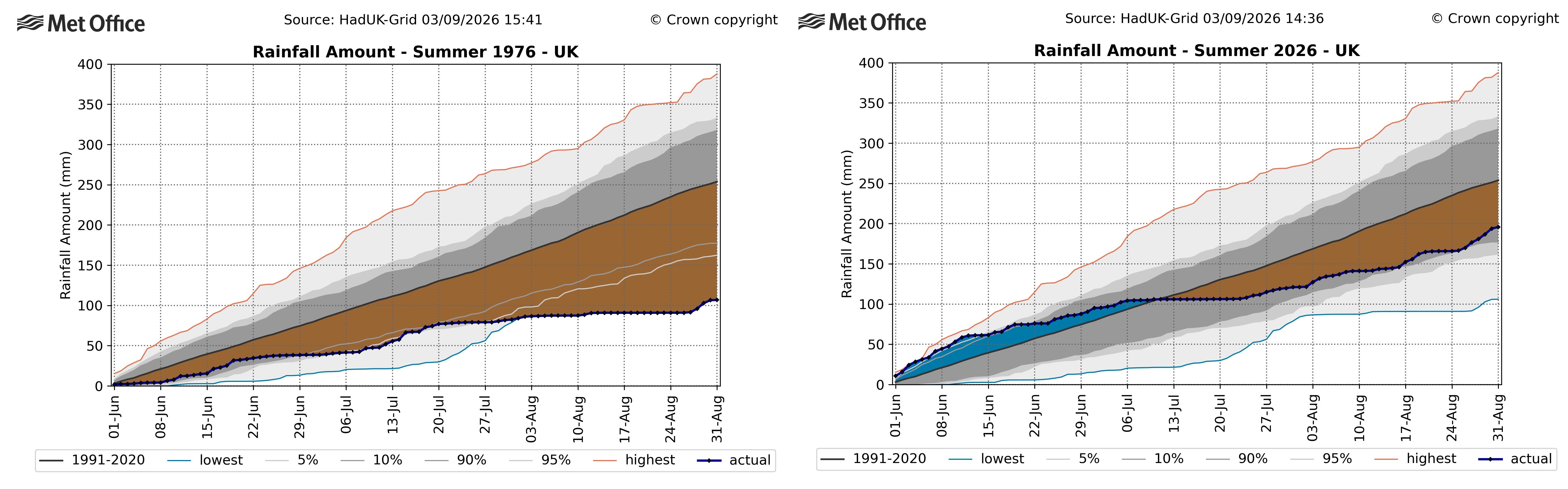
July 2026 was particularly notable. England and Wales recorded their driest Julys on record, while southern England experienced its driest calendar month on record. During the summer, more than half of England and all of Wales entered drought conditions.
Professor Stephen Belcher, Met Office Chief Scientist, said: "For generations, 1976 has been remembered as the defining hot summer. Yet summer 2026 has shown how much the UK's climate has changed, setting new records for mean, maximum and minimum temperatures. Comparing these two remarkable summers, separated by 50 years, shows that while extremes have happened in the past, our warmer climate is making them even more extreme, increasing the risks and impacts associated with heatwaves."
Similar impacts, different climate
There are clear similarities between the two summers. Both brought prolonged hot, dry weather, drought concerns, pressure on water resources and increased wildfire risk.
One important difference was the weather that preceded each summer.
The 1976 drought developed after around 18 months of below-average rainfall stretching back into 1975. By contrast, the winter preceding summer 2026 was relatively wet. The severe impacts in 2026 therefore developed from a much wetter starting point.
The nature of the warmth also differed. While 1976 remains renowned for the persistence of its heat, 2026 has become the UK's warmest summer on record by mean, maximum and minimum temperature. Exceptionally warm days were accompanied by record-breaking overnight temperatures, limiting opportunities for people, buildings and infrastructure to cool increasing potential impacts on health and the natural environment.
Comparing the numbers
Impacts on Europe
The contrast was also evident across Europe. During the 1976 heatwave, daytime temperatures exceeded 40°C in parts of southern Europe, while the UK reached 35.9°C at Cheltenham. In 2026, temperatures rose above 45°C in parts of southern Europe, with numerous national, annual and monthly records set across the continent. Exceptionally high overnight minimum temperatures were also a defining feature of the 2026 heatwaves, reducing opportunities for people, buildings and infrastructure to cool. World Weather Attribution analysis found that, across the region studied, the 2026 heatwave was the most severe on record and that heat of this intensity would have been virtually impossible in June 1976. It estimated that an equivalent event in 1976 would have been around 3.5°C cooler during the day and 2.4°C cooler at night.
Looking ahead to 2056
The summer of 1976 remains one of the UK's most iconic heatwaves, but it also provides a benchmark for understanding how extreme heat may evolve in a warming climate. To mark its 50th anniversary, Met Office scientists explored a plausible future scenario in which UK temperatures reach 45°C by 2056. This is not a forecast for a specific day; it illustrates how comparable heatwaves could become significantly more intense as the climate warms. The impacts experienced in 1976 and again in 2026, including impacts on health, water resources and infrastructure, highlight the challenges future generations may face.