World Space Week is an opportunity to look beyond Earth and explore the science of our wider Solar System.
While our own weather can be dramatic, it is far from unique. Other worlds experience enormous storms, extreme temperature changes, supersonic winds and clouds made from substances very different from water.
At its simplest, weather is driven by the transfer of energy. On Earth, uneven heating from the Sun creates temperature differences that move air, generate winds and help clouds and rain to develop. The same broad principles apply elsewhere, but the results depend on factors including a planet’s atmospheric composition, rotation and internal heat.
The rocky planets
Closest to the Sun, Mercury has almost no atmosphere, leaving little opportunity for clouds or winds. Its most notable feature is its extraordinary temperature range. Daytime temperatures can reach around 430°C, while conditions at night can fall to about -180°C.
Venus presents the opposite problem. Its dense, carbon dioxide-rich atmosphere has around 90 times the pressure of Earth’s, while clouds contain sulphuric acid. A runaway greenhouse effect means temperatures can exceed 450°C, making Venus hotter than Mercury despite being farther from the Sun. Winds can also reach more than 220 mph.
Mars provides perhaps the most familiar example of weather beyond Earth. Its atmosphere is much thinner than ours, allowing temperatures near the equator to rise to around 20°C during the day before falling to -100°C or lower at night. Mars has seasons, clouds formed from water ice, carbon dioxide ice and dust, and snow that may fall through its atmosphere.
The Red Planet is also known for dust storms. The largest can spread across the entire planet for weeks, while smaller dust devils twist across its surface. Seasonal freezing and thawing at the poles alters atmospheric pressure and helps drive strong winds.
READ MORE: How the Met Office forecasts space weather and why it matters
Giant storms on giant planets
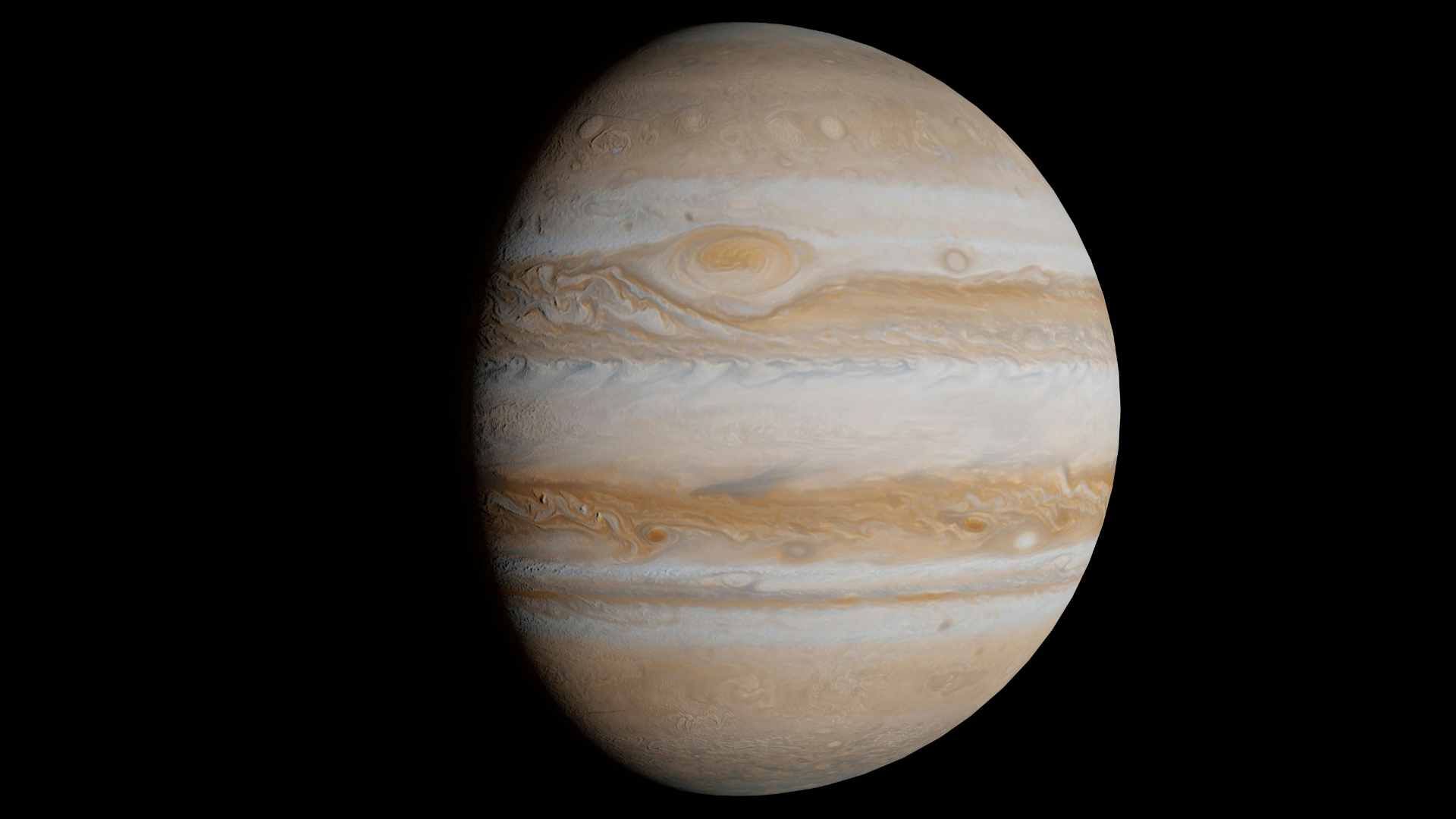
Beyond Mars, the planets become less rocky and increasingly dominated by deep atmospheres. Jupiter’s Great Red Spot is one of the best-known examples of extra-terrestrial weather. This vast high-pressure storm is around twice the size of Earth and has been spinning for at least 350 years. Jupiter’s rapid rotation and internal heat also help maintain its distinctive bands of cloud, which contain ammonia.
Saturn also generates heat within its interior, helping to power atmospheric circulation. Winds can reach around 1,100 mph, while immense white storms occasionally break through its cloud layers. Around the planet’s north pole, a jet stream forms a striking hexagonal pattern. Saturn can also produce powerful lightning and a periodic Great White Spot capable of expanding around much of the planet.
Saturn’s largest moon, Titan, offers a surprisingly Earth-like weather cycle, although with a crucial difference. Titan has clouds, rain and rivers, but at an average temperature of around -180°C, they are made from methane rather than water.
Winds at the edge of the Solar System
Uranus is tilted by 98 degrees, producing seasons that each last around 21 Earth years. Parts of the planet can face towards or away from the Sun for decades, contributing to temperature contrasts, changing clouds and major storms.
Further out, Neptune is the windiest planet in the Solar System. Its constantly changing clouds travel around the planet at high speed, with winds measured at close to 1,200 mph. Large storms can appear and disappear, including dark spots big enough to contain Earth.
Even Pluto, a dwarf planet, has atmospheric processes. Unlike the lower atmosphere on Earth, temperatures there can increase with altitude. Methane in Pluto’s extremely thin atmosphere helps trap some of the limited heat received from the Sun and contributes to frost or snow forming on mountain peaks.
READ MORE: Deeper Dive: The school-taught physics that helps us understand space weather
Forecasting weather beyond Earth
While the Met Office is best known for forecasting the weather here on Earth, it also keeps a close eye on conditions in space. Through the Met Office Space Weather Operations Centre (MOSWOC), specialist forecasters monitor activity on the Sun around the clock, tracking sunspots, solar flares, coronal mass ejections (CMEs) and changes in the solar wind.
Using observations from satellites, ground-based observatories and advanced computer models, they assess whether solar eruptions are heading towards Earth and estimate when they may arrive and what impacts they could bring.
This work is vital because space weather can affect many of the technologies we rely on every day, from satellite communications and navigation systems to power networks and aviation. As one of only a handful of centres worldwide providing 24/7 operational space weather forecasting, MOSWOC helps government, industry and infrastructure operators prepare for and respond to solar activity. So while our meteorologists forecast rain, wind and sunshine on Earth, Met Office experts are also forecasting conditions millions of miles away, ensuring we are ready for whatever the Sun sends our way.
From sulphuric acid clouds to planet-scale storms, weather beyond Earth demonstrates familiar physical principles operating under extraordinary conditions. By studying these distant atmospheres, scientists can test their understanding of weather and climate while gaining a fresh perspective on the atmosphere that makes our own planet so distinctive.
Keep up to date with weather warnings, and you can find the latest forecast on our website, on YouTube, by following us on X and Facebook, as well as on our mobile app which is available for iPhone from the App store and for Android from the Google Play store.