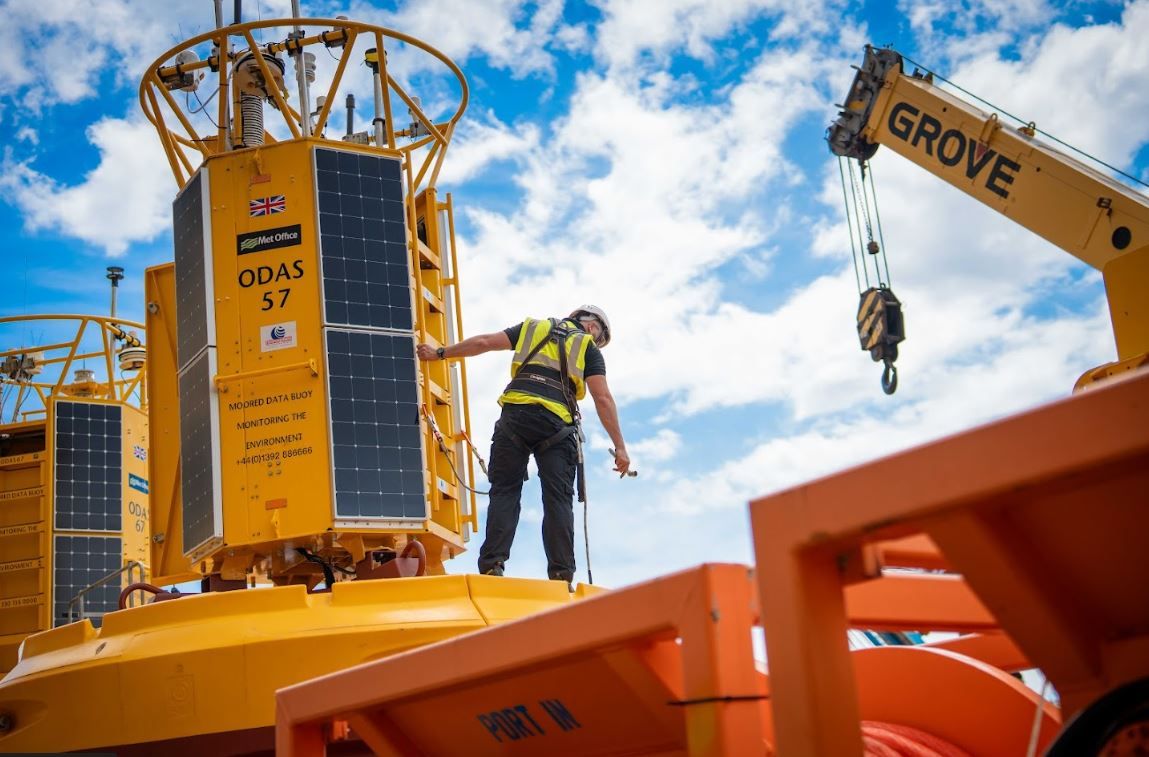
When most people think of the Met Office, they picture satellites orbiting high above the Earth or forecasters analysing weather charts.
But far fewer know about the engineering teams who work at sea, installing, repairing and upgrading the offshore weather stations that feed vital data into our forecasting models. These teams operate in challenging marine environments, undertaking hands‑on engineering that keeps the UK's ocean observations running smoothly.
In this blog, we take a closer look at what Marine Systems Engineering actually involves, and why this work is a cornerstone of UK weather and climate science.
Building the UK’s offshore weather stations
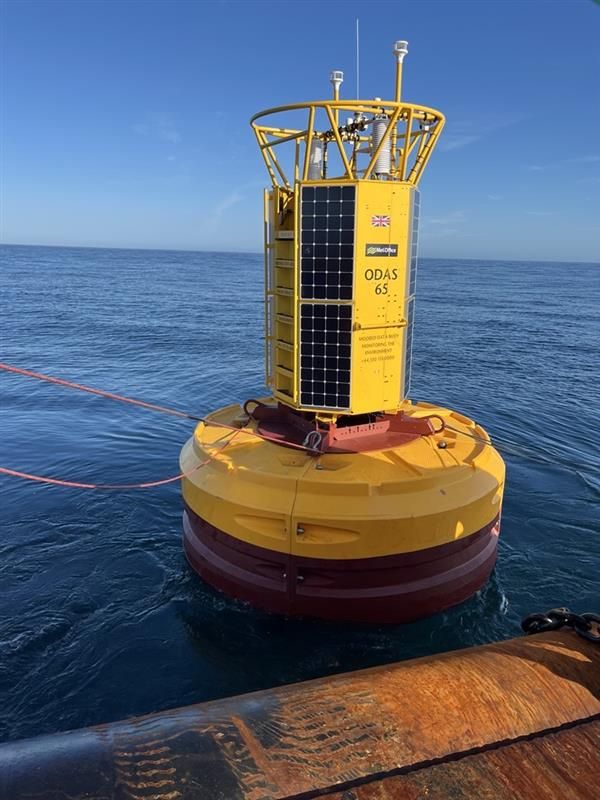
The Met Office’s Marine Systems Engineering team is responsible for building, deploying and maintaining the network of offshore weather stations, buoys, light‑vessel installations and specialist platforms, that gather observations at sea. These stations measure wind, air temperature, waves, pressure and other variables essential for accurate marine and coastal forecasting.
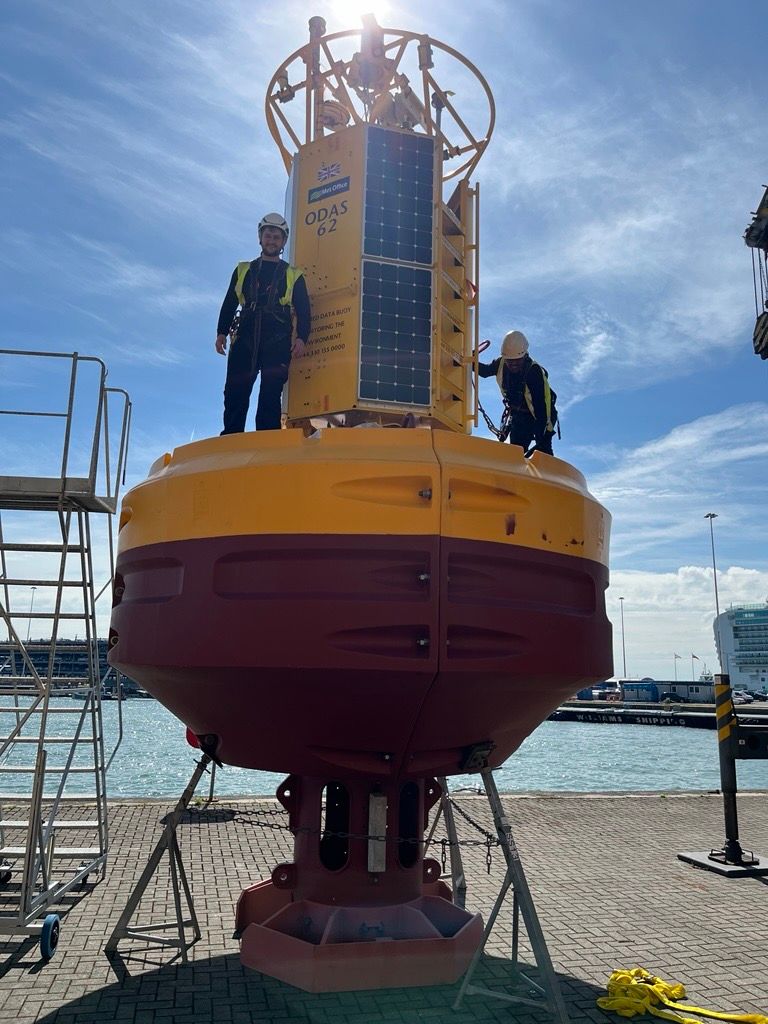
Most of this work takes place at the National Oceanography Centre in Southampton, which acts as the team’s engineering base. It is here that buoys are assembled, electrical systems wired, and sensors programmed. The site is home to research vessels, heavy lifting equipment and a dedicated workshop space, an ideal environment for constructing and testing large-scale marine observing platforms before they go offshore.
The team also works closely with Trinity House, whose light vessel network in the English Channel hosts some of the Met Office’s key marine sensors. Deploying or recovering these systems requires marine coordination, deck operations and precise installation work, often in challenging weather.
Engineering for the ocean: from solar panels to sensor cabling
A typical day for an engineer can involve everything from installing solar panels and power regulators on a buoy to assembling the battery systems that will power it during months at sea. Later the same day, the same engineer might be in a planning meeting with the crew of a research ship, preparing for an upcoming service cruise. The work is varied, practical and multidisciplinary, “many hands in many pies”, as the team describes it.
READ MORE: Forecasting for a more secure energy future
Engineers are also responsible for creating the intricate cabling that links individual sensors to the buoy’s main weather station. Each component must withstand saltwater, pressure changes, storms and constant movement, meaning reliability is critical.
The Argo programme: engineering that doubles ocean data
One of the most impactful areas of the team’s work is its involvement in the Argo programme, a global array of profiling floats that measure ocean temperatures down to 2,000 metres. These floats are central to understanding ocean warming, a key indicator of climate change.
Normally, an Argo float is designed for a 2-3 year lifespan. But by adding additional batteries and carrying out enhanced pre‑deployment checks, Met Office engineers have found ways to extend that lifespan up to 5–7 years, effectively doubling the number of observations each float can produce.
Considering each float costs around £20–25k, this engineering optimisation delivers significant value: more data, better global coverage, and a more cost‑effective use of taxpayer funding.
Preparing for a major deployment
Right now, the team is working toward a major 10‑day offshore deployment scheduled for late May. This involves months of preparation: assembling new weather stations, programming sensors, integrating power systems, and carefully planning the load-out onto the ship that will take the equipment to sea. It’s the culmination of half a year of engineering effort condensed into a short operational window.
READ MORE: Innovating the grid: how weather science is helping power the future of energy
But even the best preparation can’t control everything. As the engineers point out, the biggest uncertainty is the weather itself, large deployments can be delayed or adapted depending on conditions at sea.
Looking ahead: innovation and new capabilities
Innovation plays a major role in the team’s work. Marine engineers are now exploring the next generation of underwater sensors that could allow the network to measure beneath the surface as well as above it, data that would significantly improve ocean forecasting models. These new capabilities could form the basis of future PR and funding opportunities as interest grows in marine climate monitoring.
The Met Office’s engineering team has already been recognised for its innovative approach, winning the Experts by Nature award at the Met Office’s own awards ceremony for work that demonstrated creativity, bravery and technical excellence.
You can find the latest forecast on our website, on YouTube, by following us on X and Facebook, as well as on our mobile app which is available for iPhone from the App store and for Android from the Google Play store.